On this page
› Why Running a Diagnostic Lab Is Harder Than It Looks
A diagnostic laboratory, from the outside it appears to have a straightforward business model. Physicians’ orders a test, a sample arrives, Tests run, the result is sent, and billing is done. The cycle repeats. However, there’s so much complexity within each of these steps that if even one step is not managed properly, the entire process can stall or be disrupted.
Consider just the billing dimension. One of the major challenges in billing is claim denials, where insurance companies reject payments. Claim denial rates across diagnostic labs improved from 9.9% in 2023 to 8.0% in 2024. It is a meaningful improvement, but still a lot of money remains stuck for labs. This issue becomes even more difficult Molecular labs. In 2025, the most common denial reason across all lab segments is 'procedure not paid separately,' accounting for over 53% of total denials. That is not a coding error; rather, insurance companies have bundling rules that determine which tests are paid separately or included within a package. These rules vary across payers, test types, and CPT code combinations. Because of this complexity, it becomes extremely difficult for billing teams to manage everything manually. A better approach is the use of an automated system that can pre-check claims and identify errors before submission.
Then there are the regulatory layers. CLIA certification governs what your lab can legally test for and what quality controls must be in place. HIPAA applies to every result that leaves your building. Starting January 2025, CLIA introduced stricter requirements, including electronic communication mandates — paper mailings for regulatory notices and certificates will not be an option at all by March 2026. A 264% surge in ransomware attacks on healthcare organizations in recent years has put labs specifically in the crosshairs, given that patient result data is among the most sensitive PHI a healthcare organization can hold.
The guide is primarily intended for diagnostic labs that operate separately from a hospital, such as independent labs, physician-owned labs, and regional labs, although these concepts also apply to some extent to hospital labs.
“The gap in 2025 is not between labs that have software and labs that do not. It is between labs whose systems talk to each other across the full workflow — order entry through result delivery through billing — and labs that are stitching together disconnected tools and paying the integration tax in staff time and revenue leakage every single day.”
› 1. Laboratory Information System (LIS) — The Operational Core
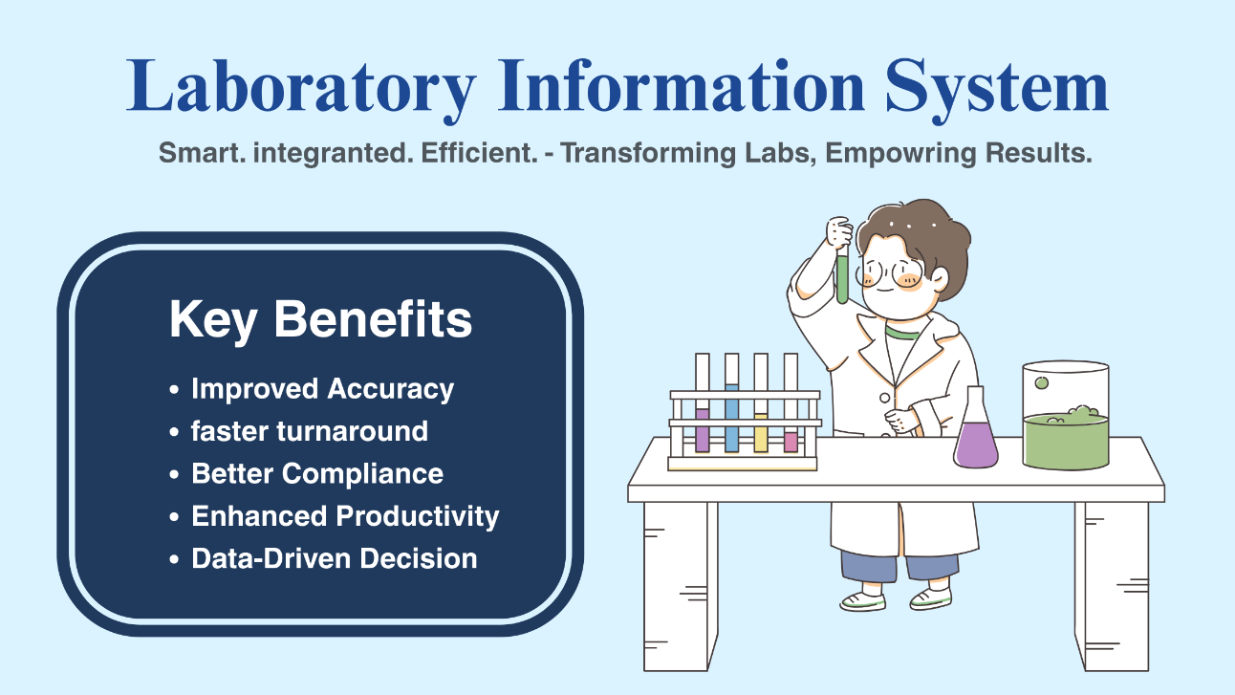
Laboratory Information System (LIS) plays the same role for the diagnostic lab as PMS does for a dental practice or EMR does for a physician's clinic. So the LIS is the central system that connects all lab processes, and without it the workflow becomes difficult to manage. But it does significantly more than a typical clinical practice management system, because the laboratory workflow has unique data requirements: specimen accession numbers, chain-of-custody tracking, instrument interfaces, reference range management, result verification workflows, and report generation all happen inside the LIS.
It is very important to clearly understand the difference between LIS (Laboratory Information System) and LIMS (Laboratory Information Management System). An LIS is designed for clinical diagnostic labs — the ones doing patient testing, billing insurance, and sending results to physicians. LIMS is a system primarily designed for research labs, pharmaceutical quality control, and environmental testing labs where the focus is on samples rather than patients. If you are running an outpatient diagnostic lab, you need an LIS. For research or industrial testing type work, a LIMS is used. The two categories overlap in features but their compliance design is different because an LIS follows HIPAA and CLIA rules, while a LIMS is not usually built around these healthcare regulations.
Width: 0px, Height: 0px
Width: 1292px, Height: 727px
Width: 1260px, Height: 709px
Width: 1216px, Height: 684px
Width: 1197px, Height: 674px
Width: 1167px, Height: 657px
Width: 1141px, Height: 642px
Width: 1087px, Height: 612px
Width: 1086px, Height: 611px
Width: 1080px, Height: 608px
Width: 1077px, Height: 606px
Width: 1076px, Height: 605px
Width: 1074px, Height: 604px
Width: 1070px, Height: 602px
Width: 1065px, Height: 599px
Width: 1064px, Height: 599px
Width: 1065px, Height: 599px
Width: 1066px, Height: 600px
Width: 1071px, Height: 603px
Width: 1080px, Height: 608px
Width: 1089px, Height: 613px
Width: 1092px, Height: 614px
Width: 1094px, Height: 616px
Width: 1100px, Height: 619px
Width: 1101px, Height: 620px
Width: 1105px, Height: 622px
Width: 1107px, Height: 623px
Width: 1109px, Height: 624px
Width: 1112px, Height: 626px
Width: 1115px, Height: 627px
Width: 1117px, Height: 629px
Width: 1119px, Height: 630px
Width: 1124px, Height: 632px
Width: 1126px, Height: 634px
Width: 1132px, Height: 637px
Width: 1135px, Height: 639px
Width: 1139px, Height: 641px
Width: 1140px, Height: 641px
Width: 1141px, Height: 642px
Width: 1142px, Height: 643px
Width: 1144px, Height: 644px
Width: 1146px, Height: 645px
Width: 1147px, Height: 645px
Width: 1149px, Height: 647px
Width: 1150px, Height: 647px
Width: 1152px, Height: 648px
Width: 1154px, Height: 649px
Width: 1157px, Height: 651px
Width: 1159px, Height: 652px
Width: 1164px, Height: 655px
Width: 1165px, Height: 656px
Width: 1166px, Height: 656px
Width: 1170px, Height: 658px
Width: 1171px, Height: 659px
Width: 1172px, Height: 659px
Width: 1174px, Height: 661px
Width: 1175px, Height: 661px
Width: 1176px, Height: 662px
Width: 1177px, Height: 662px
Width: 1180px, Height: 664px
Width: 1181px, Height: 665px
Width: 1184px, Height: 666px
Width: 1185px, Height: 667px
Width: 1189px, Height: 669px
Width: 1192px, Height: 671px
Width: 1194px, Height: 672px
Width: 1195px, Height: 672px
Width: 1196px, Height: 673px
Width: 1197px, Height: 674px
Width: 1199px, Height: 675px
Width: 1200px, Height: 675px
Width: 1202px, Height: 676px
Width: 1204px, Height: 677px
Width: 1206px, Height: 679px
Width: 1207px, Height: 679px
Width: 1210px, Height: 681px
Width: 1211px, Height: 681px
Width: 1214px, Height: 683px
Width: 1215px, Height: 684px
Width: 1217px, Height: 685px
Width: 1219px, Height: 686px
Width: 1221px, Height: 687px
Width: 1222px, Height: 688px
Width: 1224px, Height: 689px
Width: 1226px, Height: 690px
Width: 1226px, Height: 690px
Width: 1227px, Height: 690px
Width: 1227px, Height: 690px
Width: 1229px, Height: 692px
Width: 1230px, Height: 692px
Width: 1231px, Height: 693px
Width: 1232px, Height: 693px
Width: 1234px, Height: 694px
Width: 1237px, Height: 696px
Width: 1239px, Height: 697px
Width: 1242px, Height: 699px
Width: 1244px, Height: 700px
Width: 1245px, Height: 701px
Width: 1246px, Height: 701px
Width: 1247px, Height: 702px
Width: 1251px, Height: 704px
Width: 1254px, Height: 706px
Width: 1256px, Height: 707px
Width: 1257px, Height: 707px
Width: 1259px, Height: 708px
Width: 1261px, Height: 710px
Width: 1262px, Height: 710px
Width: 1264px, Height: 711px
Width: 1266px, Height: 712px
Width: 1267px, Height: 713px
Width: 1269px, Height: 714px
Width: 1270px, Height: 715px
Width: 1271px, Height: 715px
Width: 1272px, Height: 716px
Width: 1274px, Height: 717px
Width: 1276px, Height: 718px
Width: 1277px, Height: 719px
Width: 1279px, Height: 720px
Width: 1280px, Height: 720px
Width: 1281px, Height: 721px
Width: 1282px, Height: 721px
Width: 1284px, Height: 722px
Width: 1287px, Height: 724px
Width: 1289px, Height: 725px
Width: 1289px, Height: 725px
Width: 1290px, Height: 726px
Width: 1291px, Height: 726px
Width: 1291px, Height: 726px
Width: 1292px, Height: 727px
Width: 1292px, Height: 727px
Width: 1292px, Height: 727px
Width: 1292px, Height: 727px
Width: 1292px, Height: 727px
Width: 1292px, Height: 727px
Width: 1292px, Height: 727px
Width: 1292px, Height: 727px
Width: 1292px, Height: 727px
Width: 1292px, Height: 727px
Width: 1292px, Height: 727px
Width: 1290px, Height: 726px
Width: 1276px, Height: 718px
Width: 1274px, Height: 717px
Width: 1269px, Height: 714px
Width: 1250px, Height: 703px
Width: 1247px, Height: 702px
Width: 1245px, Height: 701px
Width: 1241px, Height: 698px
Width: 1239px, Height: 697px
Width: 1237px, Height: 696px
Width: 1235px, Height: 695px
Width: 1234px, Height: 694px
Width: 1234px, Height: 694px
Width: 1237px, Height: 696px
Width: 1240px, Height: 698px
Width: 1239px, Height: 697px
Width: 1237px, Height: 696px
Width: 1240px, Height: 698px
Width: 1241px, Height: 698px
Width: 1242px, Height: 699px
Width: 1241px, Height: 698px
Width: 1239px, Height: 697px
Width: 1237px, Height: 696px
Width: 1235px, Height: 695px
Width: 1235px, Height: 695px
Width: 1235px, Height: 0px
Width: 1235px, Height: 695px
» What a Modern LIS Must Do
At minimum, a clinical LIS handles all basic lab operations such as order entry, tracking samples via barcode, routing the test to the correct machine or department, entering and verifying results, generating reports and sending them to the patient or doctor, and maintaining a complete record of what happened with each sample. The best LIS platforms of 2025 don’t just perform simple tasks; their real value lies in how well they integrate billing, connect with lab instruments, and streamline report delivery. Billing in a separate system would involve extra manual work and data duplication.
Another key distinction is between cloud-based and on-premise systems. Legacy on-premise LIS systems require heavy IT setup and slow updates; modern cloud-based SaaS LIS come with automatic updates, remote access, and significantly lower maintenance. So labs that still using server-based systems likely face higher operational costs. Older on-premise systems require frequent hardware replacement or upgrades, IT support, and manual validation of updates, all of which can be time-consuming and costly. Over 3–4 years, these costs add up, making cloud systems a more budget-friendly choice.
| Tool | Best For | Price (approx) | What Sets It Apart |
| LigoLab | Clinical + pathology + molecular labs | Contact for pricing | Unified LIS + RCM in one platform; AI-driven CPT coding; built-in billing |
| Orchard Software | Midsize outpatient and outreach labs | Contact for pricing | Strong HL7 interfaces; excellent outreach client management tools |
| CGM LABDAQ | Clinical labs; outreach growth focus | Contact for pricing | Client portal; EHR interfacing; open API; patient-centric workflows |
| Dendi | Specialty and esoteric labs | Contact for pricing | Interpretive reporting integrations; RCM partner connections; modern UI |
| CrelioHealth | Growing independent labs | Subscription tiers available | Competitive pricing; multi-lab support; Strong patient portal module |
| Prolis | Compliance-focused outpatient labs | Contact for pricing | CLIA audit trail tools; automated alerts for certificate and QC lapses |
| Epic Beaker | Hospital-integrated lab environments | Enterprise pricing | Deepest Epic EHR integration; ideal when the hospital system runs Epic |
“Integration is the real evaluation criteria: When evaluating any LIS, the questions that matter most are: (1) Which laboratory instruments does it interface with natively? (2) Which EHR systems does it integrate with, and via what protocol — HL7 2.x, HL7 FHIR, or proprietary? (3) Is the billing module truly built into the platform, or is it a separate add-on with a data sync? Labs that buy a best-in-class LIS and a separate billing system often spend more time managing the integration than they save in either system.”
› 2. Specimen Tracking and Accessioning — Chain of Custody From Collection to Result
Every sample that comes into the lab represents a patient’s health decision and a billable event. If a sample is misrouted, labeled incorrectly, or not processed within the required timeframe, it goes beyond an operational error. It is not just an operational mistake but also a compliance issue, a patient safety risk, and a financial loss that is often not reflected in reports because the sample never reaches the complete process.
It is where the Barcode-based tracking is introduced to every tube or container at the point of accession. As the specimen moves through the lab such as processing, testing, and storage. Each scan creates a time-stamped record. This chain creates a complete traceable history of the sample and ensures proper traceability as per CLIA regulations. Labs that can inform physician that exactly where a specimen is and when results will be ready to develop strong referral relationships that labs running on paper logs cannot match.
For labs that offer mobile phlebotomy or home collection services. A segment that grew significantly after 2020 and is now a common expectation in larger cities — the chain of custody problem extends beyond the lab walls. Mobile collection platforms that are connected with the LIS are used to log specimen pickup, transport conditions such as temperature, and every handoff along the way, ensuring accurate tracking and smooth operations at scale.
| Tool | Best For | Price (Approx.) | What Sets It Apart |
| LigoLab Specimen Mgmt | Full-cycle tracking within LIS | Included in LigoLab | End-to-end traceability from accession to archival. instrument-linked |
| Orchard Harvest | Outreach specimen logistics | Included in Orchard | Strong mobile collection workflow; courier tracking integration |
| SoftComputer SCM | High-volume clinical labs | Contact for pricing | Real-time location tracking; chain-of-custody compliance logging |
| Roper Technologies | Multi-site and reference labs | Contact for pricing | Centralized specimen management across distributed collection sites |
| OmniMD Lab Solutions | Mobile phlebotomy + LIS connection | Contact for pricing | GPS-enabled collection tracking; automated intake integration |
› 3. Lab Billing and Revenue Cycle Management — The Most Complex Piece of the Stack
Laboratory billing and physician billing are materially different from each other, and understanding this distinction matters when evaluating software options. A physician's bill is normally based on time and clinical judgment, like an office visit, a procedure, or a consultation. In a lab, billing each test is separate, with its own CPT code, its own payer-specific coverage policy, its own medical necessity documentation requirement, and in some cases, its own prior authorization workflow. A single patient case can generate 20 to 30 individual billing lines, each of which can be denied for different reasons.
The denial landscape in 2025 measurably harder than it was three years ago. The claim denial rate reaching 11.8% in 2024 and is likely to rise to 12 to 15% through 2025. Payers have deployed AI-based systems that automatically reject claims based on rules such as coding combinations, frequency limits, and medical necessity. So the Labs that previously managed the work through manual review are now finding it difficult to handle this system, and this is causing their revenue to fall, even if their billing team is good. According to ADS client data, labs with strong payer relationships and experienced billing teams are still seeing a revenue decline of around 7% to 12% annually. Not because the billing is being done carelessly, but because the payer environment has systematically shifted against manual processes.'
The practical solution to this problem is an advanced billing platform with front-end claim scrubbing that catches denial risk before submission, automated CPT and ICD coding from the test order, and a denial management workflow that tracks every rejected claim through the appeals process with documented follow-up timelines. Labs that achieve the best performance and have a denial rate below 5% typically use billing platforms that have all these features built in, rather than managing them through separate third-party tools.
» Lab-Specific Billing Platforms
| Tool | Best For | Price (Approx.) | What Sets It Apart |
| XiFin RPM | High-volume clinical and molecular labs | Contact for pricing | Deepest lab-specific denial analytics; 20M+ claims data for benchmarking |
| LigoLab RCM | Labs wanting LIS + billing unified | Contact for pricing | AI-driven CPT coding; auto-attached documentation; built into LIS |
| Waystar | Multi-specialty including lab billing | Contact for pricing | Claim scrubbing; denial prediction; patient payment integration |
| XIFIN Lab | Reference and outreach labs | Contact for pricing | Outreach billing; complex payer contracting tools; real-time analytics |
| CollaborateMD | Labs needing billing EMR flexibility | Contact for pricing | Works across multiple LIS platforms; strong denial management module |
| ADS (Billing Svc) | Labs preferring outsourced RCM | % of net collections | Fully managed lab billing; works when internal billing capacity is limited |
» Insurance Eligibility and Prior Authorization
Eligibility verification before specimen collection is one of the least glamorous but highest-ROI workflow changes an independent lab can make. A patient whose insurance coverage has lapsed, who is not covered for a specific test, or whose plan requires prior authorization for certain panels generates a denial that is extremely difficult to overturn retroactively. Verifying coverage before the order is finalized — or at minimum before the specimen is collected — eliminates a category of denial that no amount of appeals work can fully recover.
| Tool | Best For | Price (Approx.) | What Sets It Apart |
| Availity | Real-time eligibility verification | Free | 200+ payer connections; fastest front-end verification tool available |
| Waystar Eligibility | High-volume batch verification | Included in Waystar platform | Batch verification overnight for next-day collections. payer-rule alerts |
| Change Healthcare | Enterprise eligibility + auth | Contact for pricing | Prior auth workflow; payer portals; real-time benefit detail |
› 4. EHR Integration and Physician Order Management — Closing the Referral Loop
A diagnostic lab's primary customers are referring physicians. Every friction point in the ordering process — having to fax orders, waiting for results to come through a separate portal the physician rarely checks, calling to clarify an order that was illegible — erodes the referral relationship. Labs that have built seamless electronic order entry and result delivery integrations with the EHR Software their referring physicians use are functionally stickier as business partners than labs that have not, independent of any other service quality consideration.
The standard for electronic lab integration is HL7 — specifically HL7 2.x messages for orders (ORM) and results (ORU) that flow between the physician's EHR and the lab's LIS. FHIR-based integrations are increasingly supported in modern platforms and offer richer data exchange capabilities. The key operational detail is that integration maintenance is ongoing — EHR systems update, interface specifications change, and a lab with 50 referring physician practices potentially has 50 different interface maintenance obligations. Labs that have managed this well typically either use an interface engine (like Rhapsody or Mirth Connect) to centralize integration management or choose an LIS that maintains payer-grade integrations with the major EHR platforms as part of its product.
| Tool | Best For | Price (approx.) | What Sets It Apart |
| Epic Bridges | Labs whose referrers use Epic | Bundled with Epic | Gold-standard Epic-LIS integration; real-time result delivery in Epic |
| Rhapsody | Multi-EHR interface engine | Contact for pricing | Manages multiple HL7 interfaces centrally; reduces per-practice IT burden |
| Mirth Connect | Open-source interface engine | Free (commercial support available) | Flexible HL7/FHIR routing; popular in |
| OmniXchange | System-agnostic lab interfacing | Contact for pricing | Connects any LIS to any EHR; modular connector library; rapid deployment |
| Corepoint Health | Enterprise integration platform | Contact for pricing | Visual interface builder; monitoring and alerting; supports FHIR |
For labs serving practices that use Quest or LabCorp as their primary reference lab, having a direct electronic connection to those platforms for send-out tests is equally important. Orders that have to be re-entered manually at a reference lab create transcription error risk and delay the result turnaround that the referring physician is measuring against their expectation.
› 5. Patient Portal and Result Delivery
The 2014 amendment to CLIA regulations established that patients have the right to access their lab results directly from the laboratory, without having to go through the ordering physician. This right of access under HIPAA means a diagnostic lab cannot hold results pending physician review in most circumstances, and must have a mechanism for patients to request and receive their results directly. A secure patient portal satisfies this requirement and does considerably more besides.
From a patient experience standpoint, the expectation in 2025 is that lab results are available on a smartphone within hours of completion, with enough context to understand what the result means. Labs that send a paper report by mail, or that require a phone call to get results, are providing a patient experience that compares poorly to what patients receive from consumer health services. The competitive consequence is that patients mention their lab experience when reviewing their physician, and physicians whose patients consistently complain about result delivery eventually route their orders elsewhere.
The compliance dimension is more pressing still. New rules added by CLIA in 2025 further tighten electronic communication, and by March 2026, it will be mandatory to deliver all regulatory notices and certificates electronically. Labs that have not built a functioning electronic result delivery infrastructure, but also lag behind a regulatory timeline, not just a patient experience curve.
| Tool | Best For | Price(Approx.) | What Sets It Apart |
| LigoLab PatientConnect | Labs on the LigoLab platform | Included in LigoLab | Instant result release; time-stamped fulfillment logging; USCDI-compliant |
| Orchard Patient Portal | Orchard LIS users | Included in Orchard | Secure result delivery; branded portal; physician notification on release |
| CrelioHealth Portal | Independent and growing labs | Included in subscription | White-labeled portal; SMS/email notifications; mobile-first design |
| HealtheLife (Cerner) | Hospital-affiliated labs | Enterprise pricing | Integrated with Cerner EHR; Patient education content alongside results |
| MyChart (Epic) | Epic-connected labs | Enterprise pricing | Largest patient-facing health portal; result context and trend graphs |
“Compliance note: Before any AI analytics tool, marketing pixel, or third-party dashboard touches your patient result data, it requires a Business Associate Agreement. HHS's OCR has specifically flagged third-party tools as a source of inadvertent PHI disclosure. Review every vendor in your tech stack for BAA coverage — 'we don't technically store PHI' is not a compliant answer from a vendor whose tool processes data in transit.”
› 6. Instrument Interfaces and Middleware — Connecting Your Analyzers to Your LIS
The result of different Laboratory analyzers, such as hematology, chemistry, immunoassay, microbiology, molecular. The generated results should go directly into the LIS without manual typing. If a lab is running 200 - 500 specimens per day, manual transcription of analyzer results is not a workflow option; it is an error source. So that modern labs use direct instrument interfaces, where analysers are electronically connected to the LIS via a bidirectional connection, this has now become a basic expectation for clinical-level labs.
Middleware sits between the instruments and the LIS and adds rules-based intelligence to the result flow. Rather than sending every result directly to verification, middleware can auto-verify results that fall within expected parameters, flag results that need technician review, route reflex tests automatically when a result triggers a reflex protocol, and apply dilution or repeat rules based on result values. In high-volume labs, middleware can auto-verify nearly 60% to 80% of routine chemistry and hematology results without technician involvement. Because of this process, staff save their time, and also they can focus on those cases that actually require human expertise and clinical judgement.
| Tool | Best For | Price(Approx.) | What Sets It Apart |
| Roper Connectivity | High-volume multi-instrument labs | Contact for pricing | Broad instrument connectivity library; bidirectional interface support |
| Data Innovations Cortex | Auto-verification and reflex rules | Contact for pricing | Rules engine for complex auto-verification; widely adopted in U.S. labs |
| Orchard Harvest (OE) | Orchard LIS connected labs | Included in Orchard | Native middleware for Orchard; Instrument rule management is built in |
| Sysmex WAM | Sysmex instrument users | Contact for pricing | Purpose-built for Sysmex hematology; Strong auto-verify track record |
| Beckman Remisol Advance | Beckman Instrument environments | Contact for pricing | Middleware for Beckman analyzers; Rules engine for result routing |
› 7. Quality Management and CLIA Compliance Tools
CLIA certification is not a one-time achievement; the labs must continuously adhere to regulations and quality standards. It also includes quality control runs, proficiency testing, personnel competency assessments, equipment calibration logs, corrective action documentation, and an audit trail for every test result that leaves your laboratory. The more advanced testing a lab performs, the greater the compliance complexity. Simple labs have manageable rules, but high-complexity labs, such as those involved in molecular testing or mass spectrometry, sometimes require a full-time quality manager to manage compliance.
While most labs don't intentionally break rules, problems usually arise when compliance relies on spreadsheets, paper logs, or staff memory. For example, a QC chart review hasn't occurred, a sample hasn't been properly logged, or a staff assessment has expired. These small gaps normally go unnoticed, but they officially become compliance issues during a CAP or CLIA inspection. Digital quality management systems that automate alerts, track expiration dates, and generate audit-ready documentation eliminate the gaps-by-oversight problem systematically.
» Recommended: Best Quality Management Software
| Tool | Best For | Price(Approx.) | What Sets It Apart |
| QC Net (Bio-Rad) | Levey-Jennings QC management | ~$200–500/mo | Industry-standard QC software; Westgard rules built in; multi-site capable |
| Unity Real Time | Real-time peer QC comparison | Contact for pricing | Benchmark your QC against the national peer group. early drift detection |
| MedITEX / Prolis | CLIA documentation and audit trail | Included in Orchard | Automated alerts for lapses; SOP management; integrated with Prolis LIS |
| LabVantage QM | Enterprise quality management | Contact for pricing | Full QMS for labs with ISO 15189 or CAP accreditation requirements |
| Compliancy Group | HIPAA + CLIA compliance combined | ~$99/mo | Structured compliance program with documentation for dual HIPAA/CLIA needs |
CAP (College of American Pathologists) accreditation is worth a specific mention. CLIA certification is required to legally operate; CAP accreditation is voluntary but is increasingly expected by hospital systems and insurance networks as a condition of preferred provider status. Labs pursuing CAP accreditation need a quality management system that generates the documentation CAP inspectors require — a digital QMS makes this significantly less burdensome than paper-based alternatives.
› 8. Direct-to-Consumer Testing and Physician Outreach Portals
Two market channels have grown significantly for independent labs in recent years, and both require specific software infrastructure to operate at scale. Direct-to-consumer testing — where patients order their own lab tests online, schedule a collection appointment or receive a home collection kit, and get results via a digital portal — has moved from a niche wellness offering to a mainstream service line. Employer health programs, insurance-sponsored wellness testing, and consumer health awareness have all driven demand. Labs that have built a functional DTC channel have a revenue stream that is entirely independent of physician referrals and typically operates at better margins than insurance-billed clinical testing.
The physician outreach portal is the B2B equivalent — a web-based interface where referring physicians can place orders, track specimen status, view results, and communicate with the lab without calling or faxing. Labs that have built this portal into their service model report materially higher referral retention because the convenience of the experience is a competitive differentiator. A physician who can check a specimen status at 11 pm from their phone is not going to switch to a competing lab over a minor price difference.
| Tool | Best For | Price(Approx.) | What Sets It Apart |
| TestDirectly | DTC lab testing portal | Contact for pricing | Rapid deployment 2–4 weeks; drive-through to home kit to retail models |
| ixlayer | Enterprise DTC and employer testing | Contact for pricing | White-label platform; API integration with any LIS; national phlebotomy network |
| Everly Health | Consumer-branded DTC testing | Contact for pricing | At-home kit fulfillment; physician oversight via the PWNHealth network |
| LigoLab Outreach | Physician outreach portal | Included in LigoLab | Client portal for order entry, tracking, and result viewing; white-labeled |
| Orchard Outreach | Multi-client outreach management | Included in Orchard | Client account management; stat-routing; result notification preferences |
› 9. HIPAA Compliance, Cybersecurity, and CLIA Requirements
Diagnostic labs operate at one of the most sensitive intersections in healthcare data. A single lab information system holds test results that include cancer diagnoses, genetic conditions, STI status, drug use, pregnancy, and mental health markers for potentially millions of patients. If such a data breach occurs, its financial and operational impact can be huge, and for a regional lab, such a breach can endanger the business itself.
HIPAA rules have become even more strict and technical in 2025. The new proposed security rules will require labs to properly implement cybersecurity measures such as multifactor authentication, data encryption, regular software updates (patch cycles), penetration testing, and incident response plans. These are no longer treated as optional safety suggestions but as clear requirements. Labs that view cybersecurity as solely an IT department job and do not assume compliance responsibility are facing dual risks—the risk of data breaches and the risk of regulatory penalties.
The 2025 updates to CLIA where electronic communication, which has become mandatory, testing quality standards have become stricter, and maintaining proper documentation of cybersecurity updates has also become necessary. Testing quality standards are more prescriptive. Cybersecurity updates must be documented. Labs operating on the assumption that CLIA compliance and IT security are separate programs need to integrate them — the compliance program now has technical specifications, and the IT program now has regulatory obligations.
» Recommended: List of Top HIPAA Compliance Software
| Tool | Best For | Price (Approx.) | What Sets It Apart |
| Compliancy Group | HIPAA compliance management | ~$99/mo | Guided risk assessment; BAA tracking; staff training; audit documentation |
| HIPAAmate | Staff training + policy library | ~$50/mo | Online training modules; completion tracking, policy templates |
| Virtru | Encrypted email for PHI | ~$5/user/mo | HIPAA-compliant encryption; integrates with Gmail and Outlook |
| CrowdStrike Falcon | Endpoint security for lab workstations | ~$8/device/mo | AI threat detection; covers analyzers, LIS terminals and front-desk systems |
| Carbonite / OpenText | Automated encrypted backup | ~$8/device/mo | HIPAA-compliant backup; ransomware recovery; immutable storage option |
| Censinet | Third-party vendor risk management | Contact for pricing | CLIA/HIPAA vendor compliance assessments; BAA tracking across the vendor network |
“Critical in 2025: Every AI tool, analytics plugin, or marketing platform that receives data from your LIS or patient portal requires a signed Business Associate Agreement. HHS has specifically flagged analytics tools as a category of inadvertent PHI disclosure. Run a vendor audit: list every third-party tool that touches patient data at any point, confirm you have a BAA in place for each one, and terminate or renegotiate with vendors who will not sign. This is not optional risk management — it is a regulatory requirement.”
› 10. Accounting and Financial Management
The financial system of diagnostic labs is more complex than that of normal businesses, and normal accounting software cannot handle it properly unless it is specially configured. Labs receive payments from insurance companies much after the audit, and many times, the approved amount does not even match the original billed amount. Though the labs must closely monitor how much each payer or insurance provider is actually reimbursing, and which contracts are profitable versus financially unsustainable. When the accounting system is properly configured, this type of analysis becomes much easier. However, without the right setup, tracking financial performance and payer profitability can become extremely difficult.
The other financial metric that most labs track inadequately is cost per test — the fully loaded cost of running a specific test panel, including reagent cost, instrument depreciation, staff time, and overhead allocation. Without this number, pricing decisions for direct-pay services, negotiations with payers at contract renewal, and decisions about which new test to add to the menu are all made without the data they require. A well-configured accounting system surfaces this analysis; a poorly configured one forces it into spreadsheets that get updated quarterly at best.
| Tool | Best For | Price(approx.) | What Sets It Apart |
| QuickBooks Online | Most independent labs | ~$30–90/mo | Largest accountant network; Reliable bank feed; robust reporting |
| Xero | Cloud-first or multi-entity labs | ~$15–78/mo | Clean UI; strong for labs with multiple Ownership or location structures |
| Sage Intacct | Reference labs and multi-site groups | Contact for pricing | Multi-entity consolidation; Real-time financial reporting across sites |
| NetSuite | Large lab groups and networks | Contact for pricing | Full ERP; inventory management for reagents and supplies alongside financials |
› 11. HR, Payroll, and Staff Management
Staffing and HR management in diagnostic labs is far more complex than in typical businesses. Roles such as Medical Laboratory Scientists, Lab Technicians, and Pathology Assistants require professional licenses that must be continuously monitored and renewed on time. In addition, competency assessments are mandatory under CLIA regulations, meaning labs must maintain documented proof that each staff member has been properly evaluated for the procedures they perform. This documentation must remain audit-ready at all times. Labs rely on outdated or poorly maintained spreadsheets to manage these records, and the risk of compliance failures increases significantly. Failing a CLIA inspection due to missing or expired documentation is often an avoidable operational issue rather than a technical limitation.
Scheduling in clinical labs is far more complex than standard shift management, as labs must handle emergency and STAT testing coverage, night and weekend rotations, instrument maintenance schedules, and proficiency testing requirements. Most regular scheduling tools cannot effectively manage these lab-specific operational and compliance needs without customization. Labs with 24-hour operations benefit from scheduling software that tracks both coverage and compliance simultaneously.
| Tool | Best For | Price(approx.) | What Sets It Apart |
| Gusto | Payroll for labs up to ~50 staff | ~$40 + $6/person/mo | Automated tax filings; benefit administration; simple onboarding |
| ADP TotalSource | Larger groups; multi-state compliance | Contact for pricing | Full HR outsourcing; workers' comp; multi-state payroll compliance |
| Deputy | Shift scheduling + compliance tracking | ~$3.50/user/mo | Labor compliance alerts; shift swap management; overtime flags |
| BambooHR | HR records + competency documentation | Contact for pricing | Labor compliance alerts; shift swap management; overtime flags |
› 12. Website, Local SEO, and Digital Presence
The digital presence strategy for a diagnostic lab has two distinct audiences, and a lab that treats them identically will serve neither well. Referring physicians and healthcare organizations are looking for a professional services partner, so they want to see things like test menus, reference ranges, turnaround time commitments, accreditation status, and a credentialing or onboarding process they can initiate online. Patients, mainly those who are seeking direct-access testing or home collection services, expect a consumer-grade experience with easy online ordering, transparent pricing, trustworthy branding, and digital result delivery.
Most lab websites are not designed to effectively serve both physicians and patients. They were created when the lab was established, have not been materially updated since, and function primarily as a digital business card. The labs gaining referral market share in competitive metro markets are the ones treating their website as a sales and service tool — with test catalogs that are actually searchable, physician onboarding workflows, and patient-facing direct-to-consumer ordering capability.
| Tool | Best For | Price (Approx.) | What Sets It Apart |
| Squarespace | Clean, manageable website builder | $23–65/mo | Modern templates; Manageable without a developer; good for new labs |
| WordPress + WPEngine | SEO-focused custom sites | $30–100/mo | Maximum SEO control; Content-heavy test catalog builds; developer required |
| PatientPop | Healthcare-specific web presence | ~$400/mo | Built-in SEO; online booking; Review management for health practices |
| BrightLocal | Local search rank tracking | ~$29/mo | Citation building; Rank monitoring for location-specific lab searches |
| Semrush | Full SEO and content strategy | ~$140/mo | Test-name keyword research; Competitor gap analysis; content planning |
A fully completed, actively managed profile — services listed, hours current, patient reviews responded to — is the most cost-effective local marketing a collection site can do. It is also the most commonly neglected, which means the competitive bar is lower than in most other healthcare categories.
› 13. Patient Communication, Appointment Scheduling, and Collection Booking
For labs that operate patient service centers or phlebotomy collection sites, the scheduling and communication layer determines whether those sites run at capacity or perpetually underperform. Online appointment booking — where a patient can select a test, choose a collection location, pick a time slot, and receive a confirmation and reminder — is now the expectation. Labs that still take collection appointments exclusively by phone are limiting their accessible patient volume to the subset who are willing to make a call during business hours and wait on hold.
The communication system reduces missed collection appointments, and the same system is used for result notifications. If patients receive a text message that their results are ready and a link to a secure portal, they will check their results more quickly, the lab will have to make fewer follow-up calls, and their overall experience will be better compared to a patient who calls the lab two days after collection to ask where their results are.
» Recommende: Top Appointment Scheduling Software
| Tool | Best For | Price(approx.) | What Sets It Apart |
| NexHealth | Online booking + communication | ~$400/mo | Real-time appointment booking; automated reminders; patient messaging |
| Luma Health | Appointment automation for health orgs | ~$200/mo | Multi-channel reminders; waitlist filling; post-collection follow-up |
| Klara | HIPAA-compliant messaging | ~$300/mo | Two-way texting; result notification; physician-patient-lab messaging |
| Calendly + Zapier | Lightweight scheduling for small labs | ~$15–30/mo | Quick to deploy; no native LIS integration but workable for low volume |
› Recommended Stacks by Lab Size and Stage
The right stack depends heavily on test volume, test complexity, payer mix, and whether the lab is starting fresh or migrating from a legacy system. Below is a practical framework for three stages of lab operation — not a comprehensive list, but the core tools that address the highest-leverage needs at each level.
» New or Small Independent Lab (under 200 specimens/day) — ~$2,000 to $4,000/month
- LIS: CrelioHealth or Prolis — accessible pricing; strong patient portal; CLIA audit trail built in
- Billing: Start with your LIS's built-in billing or a hybrid outsourced partner; add Availity for eligibility (free)
- Specimen tracking: Within LIS; barcode labels from day one — this is not optional
- Quality management: QC Net Bio-Rad (~$200/mo) for Levey-Jennings; paper SOP binder transitioning to digital
- Patient portal: Included in CrelioHealth or Prolis subscription
- Physician interface: HL7 orders/results to the top 5 referring practices; fax as a fallback for others
- HIPAA + Security: Compliancy Group (~$99/mo) + Carbonite backup (~$300/year)
- Accounting: QuickBooks Online (~$30/mo)
- Payroll: Gusto (~$70–100/mo)
- Website: Squarespace (~$35/mo) + Google Business Profile (free, fully completed)
- Communication: Luma Health (~$200/mo) for collection appointment reminders
» Established Mid-Size Lab (200–1,000 specimens/day) — ~$6,000 to $14,000/month
- LIS + RCM: LigoLab or Orchard Software — unified LIS and billing on one platform
- Instrument interfaces: Direct bidirectional connections to all analyzers; middleware (Data Innovations) for auto-verification
- Billing: XiFin or LigoLab RCM with front-end claim scrubbing; Waystar for eligibility and prior auth
- EHR integration: Rhapsody or Mirth Connect as interface engine for managing multiple physician connections
- Patient portal: Branded portal included in LIS; SMS/email result notifications
- Quality management: QC Net + LabVantage or MedITEX for full QMS documentation
- HIPAA + Security: Compliance Group + CrowdStrike endpoint protection + Censinet for vendor risk management
- DTC / Outreach: Orchard Outreach portal for physician clients; TestDirectly if DTC is a priority channel
- Accounting: QuickBooks Online Essentials or Xero (~$60–80/mo)
- HR + Payroll: BambooHR for competency documentation + Gusto for payroll (~$160/mo combined)
- Marketing: BrightLocal + Semrush (~$170/mo); Google Ads ($500–1,000/mo budget for collection site visibility)
» Reference Lab or Multi-Site Group (1,000+ specimens/day) — $20,000+ per month
- LIS: LigoLab enterprise or Orchard with full multi-site configuration
- RCM: XiFin RPM at enterprise tier — the analytics depth at this volume justifies the investment
- Automation + middleware: Full track automation where specimen volume supports it; Data Innovations Cortex for auto-verification rules
- Integration: Rhapsody Enterprise or Corepoint for managing 50+ physician practice HL7 connections
- Quality: Full QMS platform (LabVantage); CAP accreditation compliance documentation
- DTC + Outreach: ixlayer for enterprise DTC; custom outreach portal built on LIS outreach module
- Security: CrowdStrike enterprise + managed security operations center (SOC) + annual penetration testing
- Finance: Sage Intacct for multi-entity consolidation; NetSuite if reagent/supply inventory management is also needed
- Marketing: Healthcare-specialized marketing agency; full digital presence management
› The One Thing Most Labs Get Wrong About Technology
It is integration. Not features, not pricing, not UI design — integration. Labs evaluate software category by category, find the best-reviewed tool in each category, and end up with a stack of six or seven systems that each work well independently and create friction at every handoff point. Orders re-entered between systems. Results were manually exported and imported. Billing data that does not match LIS data. QC records are maintained in a system that does not talk to the LIS, where the test results live.
Every integration gap in a lab is a staff time tax. Someone is doing something manually to compensate for two systems that should communicate directly. At 50 specimens per day, that tax is manageable. At 500, it is a staffing problem. At 2,000, it is the reason the lab cannot scale without disproportionately growing headcount.
“The labs that will dominate their referral networks over the next five years are not the ones with the most sophisticated analyzers. They are the ones that have solved the data flow problem — where an order placed in a physician's EHR moves through accession, analysis, verification, result delivery, and billing without a single manual intervention.”
That level of integration is achievable today with the platforms described in this guide. It requires making the LIS selection the first and most consequential decision — choosing a platform that has the instrument interfaces, EHR connections, billing integration, and patient portal your operation needs — and then building the rest of the stack around it rather than alongside it.
The regulatory environment will continue to tighten. Payer denials will not get easier. Patient expectations for digital result access will not reverse. The labs that invest in the right infrastructure now are building operational leverage that compounds over time. Those that do not are building technical debt that becomes progressively more expensive to unwind.