On this page
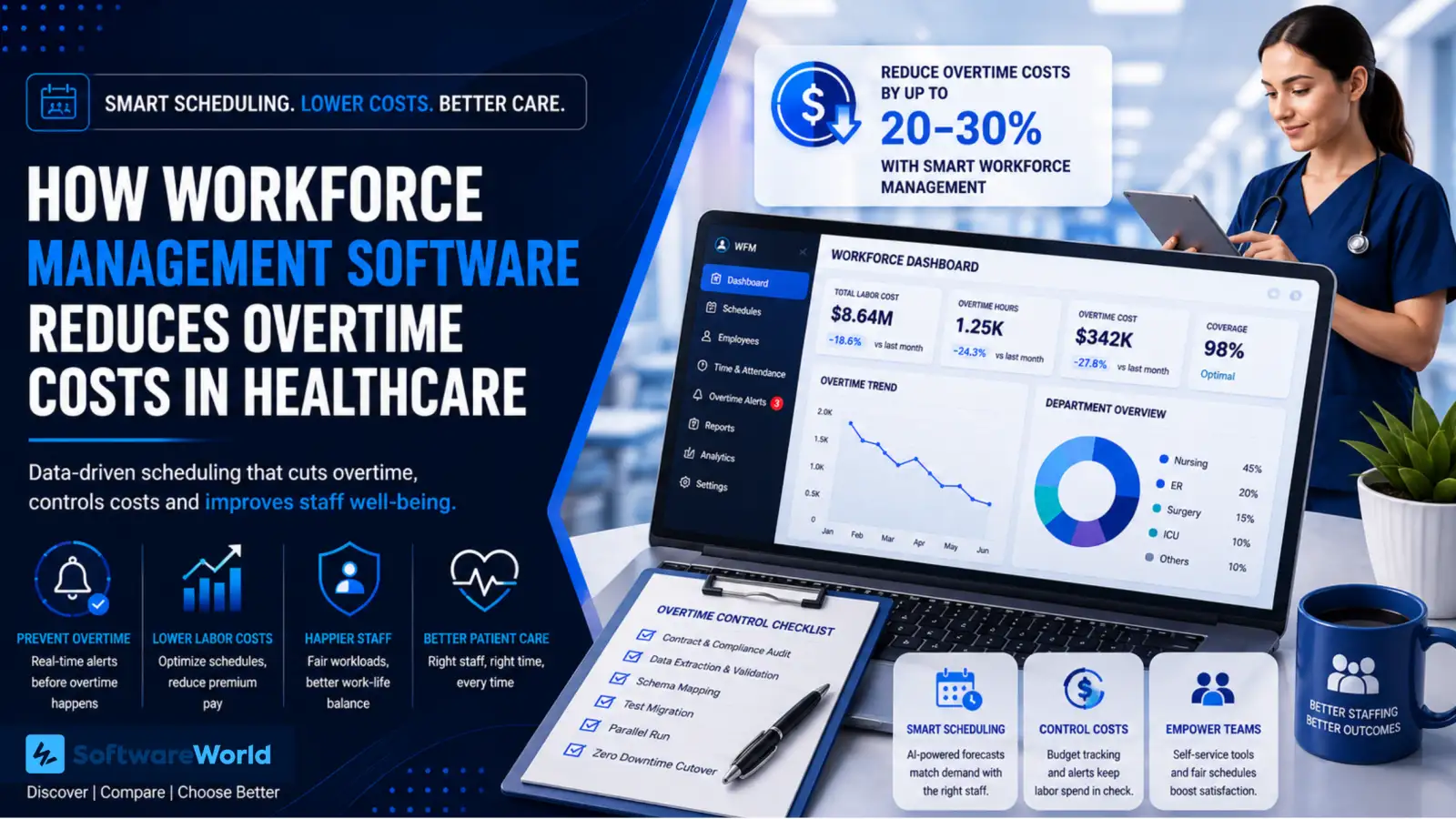
Healthcare administrators are watching labor expenses climb to unsustainable levels while manual scheduling methods fail to keep pace. The old approach leaves facilities exposed to runaway overtime costs that drain budgets and contribute to staff burnout. Workforce management for overtime reduction offers a path forward by replacing guesswork with data-driven systems that control costs without compromising the quality of care.
› Critical Pain Points Driving Healthcare Overtime Costs
Between 2021 and 2023, hospital labor costs rose by over $42.5 billion, reaching a staggering $839 billion annually. Nearly 60% of the average hospital's total expenses now go toward labor, creating immense pressure on already strained operating margins.
Schedulers working with spreadsheets cannot anticipate call-offs, sudden changes in patient volume, or shifts in staff availability in real time. This creates reactive scrambling, often resulting in overtime approvals to maintain safe staffing ratios.
Front-line providers in hospital nursing units alone worked a total of 22.6 million overtime hours in 2023-2024. When converted to full-time equivalents, those extra hours amount to roughly 11,500 positions that care organizations pay premium rates to fill rather than address through strategic hiring or better resource allocation.
Compounding these challenges, administrators lack real-time tracking to catch problems before they escalate. By the time payroll processing reveals overtime overruns, the opportunity to redirect resources has already passed.
› The Agency Nurse Dilemma
Staffing shortages push many hospitals toward temporary labor as a stopgap solution. While agency nurses provide immediate coverage, they introduce new complications that often worsen the underlying issues internal scheduling could not resolve.
Research shows that 64% of travel nurses report feeling emotionally drained, compared with 47% of non-travel nurses. Travel nurses also face elevated retention risks, with roughly one-third of those under 60 planning to leave nursing within five years.
In one study, nurses who worked shifts of 12.5 hours or more were over three times as likely to commit medical errors, while working any overtime increased the risk of errors, regardless of the initial shift length.
Broader safety metrics reveal equally troubling patterns. Research found that average agency nurse utilization exceeded safe thresholds for pressure ulcers by 140% for travel nurses in one analysis. Post-surgery complications, including hemorrhage, showed statistically significant associations with high agency nurse hours, demonstrating that premium labor creates premium risk.
› Essential Attributes of Workforce Management Software
Modern solutions resolve overtime challenges through features that give schedulers control before problems escalate. The most effective options share seven core capabilities that transform reactive scheduling into proactive resource management.
» Overtime Alerts
Systems flag potential violations before shifts are finalized or published, giving schedulers immediate notifications when building a schedule that would push any employee past their hour threshold. Managers can then reassign shifts or recruit additional coverage while maintaining budget discipline. This early warning prevents costly mistakes that traditional spreadsheets cannot catch.
» Predictive Scheduling
Historical patterns reveal staffing requirements with remarkable accuracy when analyzed by advanced algorithms. Data-driven planning models have reduced overtime by nearly 13 hours per day across tested health systems, resulting in more than $800,000 in annual net savings for one organization. Artificial intelligence examines admission trends, seasonal fluctuations, and departmental needs to recommend optimal coverage levels.
» Labor Budgeting Tools
Budget tracking integrates directly with scheduling, so managers see exactly how their decisions impact financial targets. Setting weekly or monthly spending caps within the platform allows department heads to monitor running totals as shifts are assigned. This transparent approach prevents overruns rather than discovering them after payroll closes.
» Real-Time Staffing Dashboards
Live views reveal who is currently working, who is approaching overtime thresholds, and where gaps exist across all departments. Centralized displays let administrators monitor multiple care centers simultaneously. When problems emerge, timely interventions, such as floating personnel between units or calling in per diem workers, can be made before expensive premium labor becomes necessary.
» Automated Shift Filling
Available staff who can cover open shifts without triggering overtime are automatically matched through smart algorithms. Employee certifications, preferences, seniority, and current weekly hours all factor into the suggestions the platform offers. This automation eliminates the manual cross-referencing that consumes scheduler time while reducing the temptation to approve overtime out of convenience.
» Integration With Payroll
Scheduling data flows seamlessly into payroll systems to ensure accurate compensation while maintaining audit trails. Automatic synchronization eliminates manual entry errors that lead to overpayment or disputes. Earlier access to labor cost data enables finance teams to produce more accurate monthly forecasting and variance analysis.
» Reporting And Analytics
Longitudinal data reveals patterns that inform strategic decisions about hiring, shift structures, and resource allocation. Chronic overtime hot spots become visible, allowing administrators to compare departmental efficiency or track improvement following process changes. Evidence-based decisions about expanding permanent headcount versus relying on temporary solutions become possible through long-term trend analysis.
› The Best Workforce Management Software Solutions for Reducing Overtime Costs
Several platforms have emerged as leaders in helping healthcare organizations regain control over labor spending. Each combines essential features with healthcare-specific tools, representing top-tier workforce management for overtime reduction.
» 1. SmartLinx Solutions
SmartLinx Solutions delivers a unified cloud platform purpose-built for healthcare workforce challenges in long-term care, senior living, and hospital settings. The system connects scheduling, time tracking, payroll, and analytics to give administrators complete transparency into labor costs.
What sets it apart are healthcare-specific compliance tools, such as automated reporting for regulatory requirements and predictive five-star ratings. Scheduling adapts to actual patient needs rather than static formulas, while overtime alerts catch budget issues before shifts are published, helping organizations cut expenses without compromising care quality.
Key features:
- Predictive analytics for demand forecasting and strategic staffing decisions
- Mobile-first design enabling staff to manage schedules and requests from any device
- Compliance automation, including reporting requirements and credential tracking
» 2. Nowsta
Nowsta serves home health agencies, senior living communities, and post-acute care facilities with tools that span the entire staffing life cycle. Organizations move from basic scheduling through execution and optimization using automated fulfillment and real-time shift bidding.
Care teams gain unified oversight of both internal personnel and external agency workers within a single system. This streamlined approach reduces manual work while improving shift coverage. Faster staffing decisions across multiple facilities also become possible through integrated vendor coordination and payroll workflows that eliminate duplicate entry.
Key features:
- Unified management of internal staff and external agency workers in one system
- Real-time shift bidding and automated fulfillment to reduce open shifts
- Vendor marketplace integration for streamlined temporary staffing procurement
» 3. QGenda
QGenda focuses on optimizing internal resources while minimizing reliance on premium labor. Enhanced transparency across departments enables improved resource sharing and more accurate demand prediction for reliable coverage.
The platform strengthens engagement through flexible schedules accessible via mobile applications that support shift swaps and paid time-off requests. Artificial intelligence fills schedules faster while conversational assistants handle updates immediately, reducing the administrative burden that typically slows scheduling managers down and creates inefficiencies.
Key features:
- Natural language processing for conversational schedule requests and modifications
- Workload balancing algorithms that distribute assignments fairly across teams
- Cross-facility resource sharing to maximize utilization of existing staff
» 4. Symplr
Symplr provides workforce capabilities designed to create predictability in labor spending by identifying and preventing overtime. Integrated threshold alerts and scheduling guardrails give managers proactive control over costs.
The platform improves clinical outcomes by verifying that clinicians and support staff maintain current credentials and competencies needed for their assignments. Additionally, its engagement tools help organizations monitor satisfaction levels, boost productivity, and lower turnover rates that drain resources and increase training costs over time.
Key features:
- Proactive overtime prevention with threshold alerts and scheduling guardrails
- Credential and competency verification to ensure qualified staff assignments
- Employee engagement tracking to monitor satisfaction and retention risk
› Methodology
These workforce management platforms for overtime reduction offer proven capabilities for healthcare settings rather than generic workforce tools. Each solution provides specialized functionality for patient care environments, including scheduling support, labor visibility, reporting, and tools that help control overtime without sacrificing coverage.
Strong solutions also connect with payroll and human resources systems, provide intuitive interfaces, support multi-facility operations, and offer reporting that helps administrators understand labor trends. The companies on this list align with those priorities while helping healthcare organizations reduce overtime expenses and maintain quality-of-care standards.
› Optimizing Workforces for Long-Term Sustainability
Organizations that continue to use spreadsheet-based scheduling remain perpetually vulnerable to budget overruns that progressively worsen. Predictive, automated platforms transform overtime from an uncontrollable variable into a managed component of strategic workforce planning.