On this page
› The Independent Bookstore Comeback — and the Tech Gap Nobody Talks About
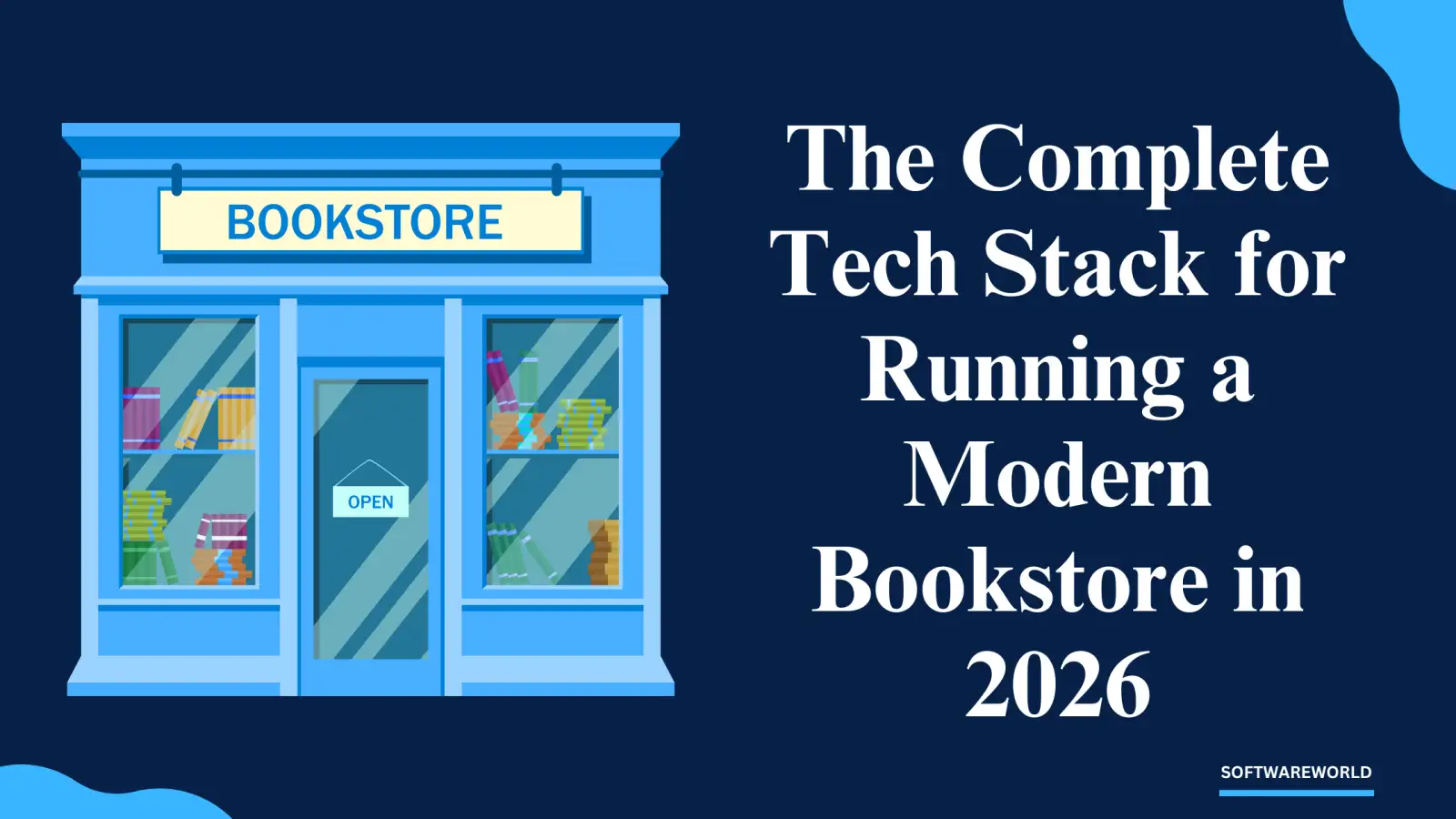
Here's the thing nobody expected: independent bookstores didn't die. They came back. By 2025, the U.S. bookstore industry was pulling in around $37.1 billion in annual revenue, growing at 1.6% a year for five consecutive years. The total count of bookstore businesses hit 54,045 — that's a 4.1% CAGR since 2020. Over 400 new indie stores opened in 2025 alone. The analysts who spent the 2010s writing the industry's obituary have mostly gone quiet.
Why? Part of it is a cultural shift. Local bookshops now account for 41.59% of global book market revenue. And the backlash against Amazon is real — Bookshop.org saw a 170% jump in Independent Bookstore Day sales in 2025 versus 2024. People are spending money at local stores on purpose. That's not a blip; it's a movement.
But here's what's frustrating: the operations behind most of these beloved stores haven't kept up. Many are still running inventory on decade-old systems that choke on ISBN lookups. Used book buybacks get logged on paper. Events are managed through Facebook posts and a spiral notebook at the register. The online store, if there is one, has zero connection to what's actually on the shelves. That disconnect — between the warm, curated experience a bookstore creates and the clunky technology running underneath it — is where margin leaks out and staff time gets swallowed up.
“Your advantage over Amazon isn't price. It never was. It's the experience of walking into a room full of books and talking to someone who's actually read them. Your tech stack should make that experience better — not slower, not more complicated, just better.”
This guide walks through every software category a bookstore needs in 2025. The emphasis throughout is on tools that strengthen what makes independent bookstores worth choosing — not tools that try to out-Amazon Amazon.
› 1. Point of Sale and ISBN Inventory — Start Here
Walk into any independent bookstore, and you're looking at inventory that would break most retail software. A small indie might carry 8,000 distinct titles — each with its own ISBN — plus used copies of many of those same titles in three different condition grades at three different price points. Throw in a new hardcover, the paperback edition, and the large-print version of a bestselling novel, and you've got three separate SKUs before you've even touched the used section. A POS built for clothing or hardware doesn't know what to do with that.
The ISBN — that 13-digit barcode on the back of every book — is what makes bookstore inventory manageable. As soon as a book is scanned, the system should automatically pull its title, author, publisher, list price, and cover image. No manual typing, no transcription errors. Stores running ISBN-native POS systems process receiving shipments and used book buybacks in a fraction of the time it takes stores that aren't.
» New vs. Used — Two Completely Different Workflows
Used books aren't just cheaper than new books. The whole process works differently: you're buying from a customer, not a publisher. You're evaluating the condition on the spot. You're issuing store credit or cash. You're creating a new inventory item tied to the same ISBN as the new copy but priced and labeled separately. Then you have to make it findable for the customer who specifically wants a used copy. POS systems built for bookstores handle all of this natively. General retail systems usually require duct-tape workarounds that break down once your used inventory grows past a few hundred titles.
| Tool | Best For | Price(Approx.) | What Sets It Apart |
| Booklog | Independent bookstores (40-yr legacy) | Contact for pricing | Purpose-built for booksellers; 2,100+ stores; deep ISBN integration; native used book module |
| Basil Bookseller | Online + offline booksellers | Contact for pricing | Cloud-based; real-time inventory sync; unified shipping, barcoding + purchasing |
| Shopify + Emersoft | Omnichannel retail | ~$89/mo + app fee | 22,917 live Shopify book stores; Pubnet ordering; in-store + online unified |
| Lightspeed Retail | Multi-location specialty retail | ~$89–269/mo | Deep inventory management; ISBN lookup; strong purchase order + reporting tools |
| Square for Retail | Budget-conscious stores | Free – $60/mo | Easy to set up; basic ISBN scanning; solid entry point with a clear upgrade path |
| Clover | Stores in bank ecosystems | ~$14–95/mo + hardware | App marketplace; ISBN apps available; flexible hardware options |
“Real-world tip: When you're demoing any POS system, don't just watch the sales screens — run through the full used book intake sequence live. How many steps are there to buy a book from a customer, price it, and put it on the shelf? In a store doing 30–50 used book transactions a day, five steps versus twelve is an hour of staff time. Every single day.”
› 2. Inventory Management and Publisher Ordering
Bookstores have a supply chain relationship that most retailers don't deal with. Almost everything flows through two wholesale distributors — Ingram Content Group and Baker & Taylor —, and the quality of your connection to them shapes how efficiently you can run the whole store. When your POS can automatically generate purchase orders based on low shelf stock, send them electronically to Ingram, and automatically pull bibliographic data, your operation runs efficiently. But when all of these processes are managed through spreadsheets and phone calls, many hours are wasted each week.
Returns are the other piece that gets messy without a system. Publisher return windows vary — sometimes it's 90 days, sometimes it's tied to a specific invoice, sometimes the rules differ by imprint. Without a system tracking return eligibility, titles quietly age out of their windows, you can't send them back, and that inventory becomes a write-off. For a small store, even a handful of those a month adds up over a year.
| Tool | Best For | Price(Approx.) | What Sets It Apart |
| Ingram ipage | Ordering through Ingram | Free with an Ingram account | Real-time availability; instant bibliographic data; full electronic ordering |
| Baker & Taylor | Supplementary distribution | Account-based pricing | Second major distributor; complements Ingram for broader title coverage |
| Pubnet (EDI) | Direct publisher ordering | Via BISAC/POS integration | Industry-standard EDI for publisher orders and inventory data exchange |
| Booklog Ordering | Booklog POS users | Included in Booklog | POS-integrated purchase orders; automatic reorder points; return tracking |
| Basil Purchasing | Basil Bookseller users | Included in Booklog | Vendor management; automated reorder suggestions; built-in receiving workflow |
Recommended: Top-Rated Inventory Management Software
› 3. Online Sales and E-Commerce
For years, the conversation around indie bookstores and e-commerce was basically: fight Amazon or give up. Neither option was great. But something changed. Bookshop.org now funnels more than 80% of its profit margin back to independent bookstores and works with over 1,900 stores nationwide. Setting up your affiliate page takes about 20 minutes. Every time someone clicks your link and buys books they might otherwise have ordered on Amazon, you get a commission without touching inventory or shipping. That's not a replacement for building your own online presence, but as a passive revenue stream, it's hard to beat.
The harder problem is inventory sync. When a customer visits your website, they need to see what's actually in stock today — not what was in stock last week when someone last updated a spreadsheet. A customer who orders online and gets a 'sorry, that's out of stock' email three days later isn't coming back. The standard now is live inventory sync between your physical POS and your online store. It's achievable on most modern platforms, and it's not optional anymore.
| Tool | Best For | Price(Approx.) | What Sets It Apart |
| Bookshop.org | Amazon alternative + passive revenue | Free; % commission | 80%+ margin to indie stores; easy affiliate setup; embedded store page |
| Shopify + Emersoft | Full omnichannel book retail | ~$89/mo + app fee | In-store + online unified; Pubnet ordering; live inventory sync |
| IndieBound | ABA-affiliated indie discovery | ABA membership required | National store directory; community-driven discovery for book buyers |
| WooCommerce | WordPress-based online store | Free + hosting ~$15/mo | Open-source; ISBN plugins available; full control over your catalog |
| Squarespace Commerce | Simple, clean storefront | ~$36/mo | Polished templates; easy product pages; No developer required |
One thing worth knowing about Bookshop.org: books ordered through your affiliate page ship from Ingram's warehouse, not yours. You earn the commission, but the customer relationship on that specific order sits with Bookshop. For big-ticket special orders and event-night sales, your own channel is still the better economics. Bookshop.org is best thought of as a way to capture customers who prefer online shopping without building a full fulfillment operation.
› 4. Customer Loyalty and Relationship Management
Bookstore regulars are some of the most loyal customers in retail — but only when the relationship is actually cultivated. A reader who's gotten three great recommendations from a bookseller, attended a couple of author events, and joined the mystery book club isn't going to Amazon for their next book. The problem is that most of that relationship lives in the head of whoever's working the register. When that person leaves — and they will eventually — the relationship history goes with them.
What a customer database does is give the store itself a memory. Not just the staff. When your system knows that this customer buys literary fiction in the spring and thrillers when the weather turns, you can send her an email about the new Tana French before it even hits the shelves. You can flag her for your next Ireland-set fiction event. You can put her on the shortlist for the subscription box curation. None of that requires a big staff or expensive software. It requires having the data and actually using it.
| Tool | Best For | Price(Approx.) | What Sets It Apart |
| Booklog CRM | Booklog POS users | Included in Booklog | Tracks purchase history and reading preferences; enables genre-targeted outreach |
| Mailchimp | Email marketing — most stores | Free – $20/mo | Easy segmentation; genre-based lists; good event announcement templates |
| Klaviyo | Data-driven email + SMS | ~$45/mo | Purchase-triggered campaigns; strong behavioral segmentation; abandoned cart |
| Lightspeed Loyalty | Lightspeed POS users | ~$45/mo | Points-based tiers; integrated email; built directly into Lightspeed |
| Stamp Me | Simple digital loyalty | ~$30/mo | Digital punch card; works with any POS; quick customer enrollment |
› 5. Events Management — Your Biggest Differentiator Needs Real Infrastructure
Author readings, book clubs, writing workshops, story times, genre nights — these aren't extras for a modern independent bookstore. They're the whole point. Events are how you turn walk-in browsers into regulars. More than 1,600 indie stores ran events on Independent Bookstore Day 2025, and stores like Skylark Bookshop and Bookshop West Portal broke their own single-day sales records because of it. Of the bookstores that are performing well today, the vast majority treat events not as a marketing expense but as a core revenue source.
But here's a gap most bookstores have that they haven't fully closed: what happens after the event? Someone attends a signing for a debut novelist, loves it, buys the book, and then... nothing. They go home. Two months later, the same author releases their second novel, and that customer has no idea. Nobody followed up. There's no system that notices they attended a literary fiction event and adds them to the lit-fic newsletter segment. Fixing that loop is what separates stores with growing communities from stores with good individual events that don't compound.
| Tool | Best For | Price(Approx.) | What Sets It Apart |
| Eventbrite | Ticketed author events + workshops | Free + 3.7% service fee | Simple ticket creation; discovery marketplace; built-in post-event email to attendees |
| Acuity Scheduling | Small group readings + workshops | ~$20/mo | Capacity management; payment at booking; preference intake forms |
| Humanitix | Community-focused ticketing | Contact for pricing | Nonprofit-friendly; accessible pricing; donates a portion to charity per ticket |
| Facebook Events | Free community promotion | Free | Widest local reach; RSVP tracking; automatic event reminders |
| Mailchimp Events | Email-integrated promotion | Within Mailchimp pricing | Event announcement and post-event follow-up handled on the same platform |
Recommended: List of Top Events Management Software
“The follow-up sequence that actually works: Within 48 hours of every author event, send ticket purchasers three things: a link to the author's other titles in your store, a short recap (a photo, a quote from the night), and an invite to your next similar event. Set it up once as an automation in Mailchimp or Klaviyo. That 20-minute setup is how a one-time attendee becomes a regular.”
› 6. Used Book Buying, Trade-Ins, and Pricing
Used books are genuinely a different business within your bookstore business. The margins can be excellent — buy a book for $2 in store credit, price it at $8, and you're looking at 75% gross margin before overhead. That beats the 40–50% you'd see on a new title from a major publisher. But the risk is real, too. Overbuy and you're sitting on a wall of $1 paperbacks that no one wants, taking up shelf space that could be earning.
The difference between profitable used book operations and just busy ones usually comes down to one thing: pricing data at the point of purchase. A buyer evaluating a box of 40 books without real-time market prices is basically guessing — going on instinct and experience. A buyer who can scan each ISBN and see what it's currently selling for on AbeBooks, Amazon Marketplace, and ThriftBooks has something to anchor to. Which titles are worth $4? Which ones are worth $0.50? Which should you pass on entirely? That data makes the difference.
| Tool | Best For | Price(Approx.) | What Sets It Apart |
| BookScouter | Used book pricing research | Free – $35/mo | Real-time comparison across 30+ buyback vendors; condition-adjusted valuations |
| AbeBooks | Online used book marketplace | ~$25/mo | Large collector audience; strong for rare + out-of-print; international reach |
| Alibris | Used + rare book marketplace | ~$19/mo | Complements AbeBooks; slightly different buyer demographic; Good for academic titles |
| ThriftBooks API | Bulk pricing benchmarking | Contact for pricing | Real-time market prices; condition grading standards; tools for bulk listing |
| Booklog Used | Integrated used book management | Contact for pricing | Condition tracking; buy-price recording; used copy linked to the same ISBN as the new one |
› 7. Your Website and Local Search Presence
Too many bookstore websites are only utilizing a fraction of their true potential. Most bookstore websites are doing about a third of what they could be. Customers come to them for three specific things: upcoming events, in-stock availability on a specific title, and staff picks they can browse before deciding to make the trip. A site that covers all three well is actively driving foot traffic. A site that's basically a digital business card with your hours and phone number is a missed opportunity every single day.
Staff picks pages are wildly underutilized as both a content asset and an SEO play. A page called 'Best Debut Novels of 2025 — Staff Picks from [Your Store Name]' does two things at once: it gives a visitor the curation experience that's the whole reason to choose an indie over Amazon, and it shows up in search results when readers look for exactly that kind of recommendation. Stores that have built a consistent habit of publishing staff picks, genre reading lists, and community reviews have compounding SEO equity that attracts the exact reader demographic they want.
| Tool | Best For | Price(Approx.) | What Sets It Apart |
| Squarespace | Design-forward bookstore sites | $23–65/mo | Best templates in its tier; event pages; commerce add-on available |
| WordPress | SEO-focused stores with content | $15–30/mo + hosting | Full flexibility; staff picks blog; reading lists; strong SEO foundation |
| Shopify | Omnichannel retail-focused sites | ~$89/mo | In-store + online unified; strong app ecosystem for book retail |
| BentoBox | Café-bookstore hybrids | ~$99–199/mo | Built for experienced retail, event pages online ordering integration |
| BrightLocal | Local search monitoring | ~$29/mo | Google Business Profile tracking citation management, and rank monitoring |
| Semrush | SEO + content strategy | ~$140/mo | Keyword research for book genres; staff picks optimization |
Don't underestimate your Google Business Profile. Keep your profile fully complete — keep current hours updated, regularly upload event photos, add genre categories to services, and respond to every review. Bookstores that appear high in searches like "bookstore near me" or "independent bookstore [your city]" treat their profile as an active marketing channel, not a form you fill out once and then forget.
› 8. Social Media and Content Marketing
Books aren't like other products, but rather have a very social nature. BookTok on TikTok has seen real and measurable growth in sales for books that become popular there. This isn't limited to online sales; people also visit stores to purchase physical copies after watching videos, which also increases in-store foot traffic. The #bookstagram community on Instagram has built a reader-to-reader recommendation culture that outperforms algorithm-driven discovery for literary and genre fiction. These aren't marketing channels you have to fake your way into. A genuine bookstore with genuine opinions has a natural home here.
The thing that works is also the simplest: put your actual booksellers on video. A 30-second clip of someone who works at your store explaining why they loved a specific book — just talking, no production, no script — is the digital version of what makes indie bookstores irreplaceable. Stores that have built real social followings aren't running a content department. They're pointing a phone at staff members who have opinions about books. That's it.
| Tool | Best For | Price(Approx.) | What Sets It Apart |
| Later | Instagram + TikTok planning | ~$18/mo | Visual content calendar; Reels + TikTok scheduling; hashtag analytics |
| Buffer | Simple multi-platform scheduling | ~$18/mo | Clean interface; solid analytics; manageable for small teams |
| Canva Pro | Graphics for events + picks | ~$13/mo | Staff pick templates; event posts; reading list graphics — easy to use |
| CapCut | Staff pick videos + BookTok | Free | Mobile-first video editing; trending audio; perfect for in-store clips |
| Hootsuite | Multi-platform management | ~$99/mo | Schedule across platforms; Team collaboration for larger stores |
Recommended: Top Content Marketing Software
› 9. Email Newsletters — Seriously Underrated
A good bookstore email newsletter is one of the best-performing marketing formats in all of retail. We're not talking about general email marketing, but rather bookstore newsletters. When a store sends weekly or biweekly emails that feel like they're written by someone who's actually read the books, sharing genuine staff recommendations, upcoming events, and new arrivals by genre, subscribers truly open up to them. Many even look forward to such newsletters. That's not a promotional email anymore; that's a service. And that distinction shows up in the numbers.
Genre segmentation is the single biggest improvement most stores can make to their email programs. Blasting every subscriber with every new arrival feels like spam, because it is. But sending your mystery readers a note about new arrivals in mystery — pulled from your POS purchase history to identify who's actually bought mysteries — that lands differently. It feels personal because it is personal. Stores that have built this segmentation into their email programs see better open rates, better click-throughs, and — most importantly — more repeat visits.
| Tool | Best For | Price(Approx.) | What Sets It Apart |
| Mailchimp | Newsletter — most bookstores | Free – $20/mo | Easy builder; audience segmentation; event templates; generous free tier |
| Klaviyo | Purchase-triggered automation | ~$45/mo | Connects to POS purchase data; genre segmentation, and behavioral targeting |
| Substack | Newsletter-as-community | Free + optional paid tier | Subscriber-facing newsletter; option to add a paid tier for premium content |
| Constant Contact | Simple newsletter | ~$12/mo | Easy interface; good for event promotion; straightforward contact import |
› 10. Payment Processing and Hardware
Compared to running a restaurant or a healthcare practice, bookstore payment processing is straightforward. You need competitive rates, reliable contactless support, and hardware that doesn't look like it belongs in a 2009 office. This last point may sound trivial, but it's very important. The checkout experience is also part of the brand. An old, boxy terminal on the counter of a beautifully curated store creates a weird mismatch that customers notice, even if they couldn't tell you why.
For stores that organize author events, mobile payment capability is very useful. With a Square reader or Tap to Pay on an iPhone, staff can process book sales in any part of the store during busy signing events, instead of sending all customers to a single fixed register. This keeps lines moving faster and captures sales from customers who might otherwise leave the store after seeing a long line.
| Tool | Best For | Price(Approx.) | What Sets It Apart |
| Square | Independent bookstores | 2.6% + $0.10 in-person | Clean hardware; mobile readers for events; free tier available; contactless + chip |
| Stripe Terminal | Tech-forward or custom builds | 2.7% + $0.05 in-person | Developer-friendly; Tap to Pay on iPhone; sleek, modern hardware |
| Lightspeed Payments | Lightspeed POS users | Custom rates at volume | Fully integrated with inventory; single platform for sales + payments |
| Shopify Payments | Shopify POS users | 2.4–2.7% in-person | Competitive rates; unified online + in-store reporting in Shopify |
| Clover | All-in-one terminal stores | 2.3–2.6% in-person | Full-featured terminal; app marketplace; receipt + signature options |
Recommended: Top-Rated Payment Processing Software
› 11. Book Subscription Boxes — Recurring Revenue Worth Building
Subscription boxes have turned out to be a surprisingly good business for indie bookstores. A subscriber paying $35 a month for two curated books generates predictable recurring revenue, usually at better margins than walk-in retail, and the relationship that develops around a well-run subscription is stickier than almost anything else a bookstore can offer. The curation — matching books to a subscriber's genre preferences and reading history — is something a good bookseller does better than any recommendation algorithm.
Its operational workload is manageable with proper planning from the start. It requires a subscription platform that handles billing and cancellations, a curation workflow that connects subscriber preferences to actual inventory, and a shipping setup that doesn't significantly impact profit margins. Stores that run subscription boxes well treat them as a distinct product line — separate inventory allocation, separate metrics, its own communication cadence — rather than just another thing stacked on top of retail operations.
| Tool | Best For | Price(Approx.) | What Sets It Apart |
| Cratejoy | Bookstore subscription boxes | ~$39/mo + transaction fee | Subscription management; built-in discovery marketplace; billing automation |
| Subbly | Subscription commerce | ~$39–79/mo | Flexible billing logic; customizable frequencies; churn management tools |
| Shopify Subscriptions | Shopify store users | App fee + Shopify plan | Adds subscriptions to the existing Shopify store. unified inventory |
| ReCharge | Higher-volume operations | ~$99/mo + fees | Advanced subscription logic; detailed analytics; cancellation flow tools |
› 12. Accounting and Financial Management
Bookstore accounting has a few wrinkles that generic small business setups handle badly without some configuration work. Consignment inventory — common with local authors and small-press publishers — needs to be tracked separately from purchased inventory because the accounting treatment is different. Used book inventory also has a different cost basis than new books. If these are tracked together, category-wise gross margin reporting becomes largely useless.
The financial metric that tells you the most about a bookstore's actual health is inventory turn rate, broken down by genre and format. A section that turns twice a year uses shelf space very differently from one that turns six times. Without visibility into that, buying decisions tend to drift toward what the buyer personally loves rather than what customers are actually purchasing, which sounds fine until you're looking at three shelves of poetry that haven't moved since last spring.
| Tool | Best For | Price(Approx.) | What Sets It Apart |
| QuickBooks Online | Most independent bookstores | ~$30–90/mo | Largest accountant network; integrates with Shopify, Square, and Lightspeed |
| Xero | Multi-location or cloud-first stores | ~$15–78/mo | Clean UI; strong for stores with a separate café or event revenue streams |
| Wave | New or very small stores | Free | Free and adequate for simple single-location operations at the start |
| A2X | E-commerce reconciliation | ~$19–69/mo | Reconciles Shopify or Amazon sales accurately into QuickBooks or Xero |
Recommended: Top Accounting Software, Top Financial Management Software
› 13. Staff Scheduling and Payroll
Bookstore staffing doesn't fit the standard retail HR mold. Many booksellers are part-time with deep knowledge in specific genres — and that expertise matters operationally. Putting your science fiction specialist on the floor during a genre event isn't just good for customer experience; it drives measurably more sales. Staff are usually highly invested in the store's culture, which means turnover costs more than it would in a generic retail job. When someone who knows 300 customers by name and taste leaves, the store loses something that takes years to rebuild.
Recommended: List of Top Payroll Software
Events add a scheduling complication that most retail tools don't handle well. An author event drawing 80 people needs different coverage than a quiet Tuesday. The lead time for figuring that out needs to connect, somehow, to the events calendar, which is often in a completely different system, managed by a different person. Stores that run events well have usually figured out a reliable handoff between whoever books events and whoever builds the schedule. A shared calendar that both functions can see is sometimes all it takes.
| Tool | Best For | Price(Approx.) | What Sets It Apart |
| Gusto | Payroll for bookstore staff | ~$40 + $6/person/mo | Automated tax filings; contractor support for event talent; benefit admin |
| Homebase | Hourly scheduling — smaller teams | Free – $99/mo | Free tier covers basics, time clock team messaging, shift scheduling |
| Deputy | Scheduling with compliance alerts | ~$3.50/user/mo | Event-linked scheduling; overtime alerts; labor compliance; shift swaps |
| When I Work | Mobile-first scheduling | ~$2.50/user/mo | Mobile clock-in; shift visibility for staff; open shift management |
| BambooHR | Staff records + HR documentation | ~$2.50/user/mo | Employee records; useful once you're past 10 staff members |
› Recommended Stacks by Stage
The right combination depends on where you are. Here's a practical framework for three different situations.
» New Independent Bookstore — ~$300 to $800/month
- POS + Inventory: Booklog (40-year track record, purpose-built) or Shopify + Emersoft if you want omnichannel from the start
- Publisher ordering: Ingram ipage — it's free, set it up before you place your first order
- Online presence: Bookshop.org affiliate page (20 minutes to set up) + a basic Squarespace or Shopify store
- Email: Mailchimp free tier — start a weekly newsletter from week one and build the list from customer one
- Events: Eventbrite — ticket everything, even free events, so you capture every attendee's email address
- Google Business Profile: Free — fill it out completely before you open; it's the most important local visibility tool you have
- Social: Instagram + TikTok — staff picks video from day one; use CapCut (free) to edit
- Loyalty: Stamp Me (~$30/mo) or whatever your POS has built in
- Accounting: Wave (free) to start; upgrade to QuickBooks when monthly revenue clears $15K
- Payroll: Gusto (~$70/mo) — handles tax filings automatically from your first hire
» Established Store with Active Events Program — ~$1,500 to $3,500/month
- POS + Inventory: Lightspeed Retail or Shopify + Emersoft for strong omnichannel + ISBN depth
- Used books: BookScouter for pricing research; Booklog or Lightspeed for condition-based inventory
- Online: Shopify with live POS sync + active Bookshop.org affiliate — run both channels
- CRM + Email: Klaviyo is tied to your POS purchase data for genre-segmented campaigns
- Events: Eventbrite + Mailchimp automation — post-event follow-up for every single event
- Newsletter: Weekly editorial email with staff picks and upcoming events, via Mailchimp or Substack
- Social: Later + Canva Pro — consistent weekly content voiced by actual staff
- Local SEO: BrightLocal — Google Business Profile monitoring + citation management
- Scheduling: Homebase or Deputy for event-aware shift management
- Accounting: QuickBooks Online configured with genre-level inventory category reporting
» Used Book Specialist or Multi-Location Store — $3,000+/month
- POS: Basil Bookseller or Booklog — both handle high-volume used book workflows with condition tracking
- Pricing: BookScouter Pro + AbeBooks + Alibris — three-platform benchmarking for every buying decision
- Online marketplace: AbeBooks + Alibris + your own site — three active channels for used inventory
- Subscription boxes: Cratejoy or Subbly — curated genre boxes as a recurring revenue line
- Accounting: QuickBooks with separate COGS tracking for new vs. used inventory
- Marketing: Genre-specific email segments in Klaviyo; targeted social content by genre community
› The Tech Stack Should Feel Like the Store
The best technology in a bookstore is mostly invisible. Customers shouldn't see the inventory system — they should see a bookseller who can tell them what to read next. The technology is what makes that possible at scale. The bookseller who can look at a customer's history in the POS and say You bought a lot of Scandinavian crime fiction last winter — have you read this yet?' is using institutional knowledge that no amount of staff training creates on its own. The system holds the memory. The human has the conversation.
More than 400 new independent bookstores opened in 2025. The ones that will still be open in 2030 are building operational infrastructure now — not logistics at Amazon's scale, just quiet, reliable systems that make six people feel like they know every customer. That's achievable. And it doesn't require a big budget or an IT department. It requires choosing the right tools and actually using them.
“Print accounts for more than 80% of book unit sales. Audiobooks are growing at over 10% a year. Independent bookstores just had their best Independent Bookstore Day on record. The book isn't dead — and neither is the store that treats technology as infrastructure for community rather than a replacement for it.”
The tools in this guide aren't here to make your bookstore look like Amazon. They're here to make the human experience of a great bookstore — the recommendations, the discovery, the events, the sense of community — possible at a scale that can actually pay rent. Local bookshops still account for 41.59% of global book market revenue. Because the experience of being handed a book by someone who loved it is something no platform has managed to replicate. Build the stack that supports that experience, and everything else follows.