
Table of Contents

› The Real Problem Most PT Clinics Are Dealing With

Let me be honest for a second.

Running a PT clinic looks manageable until you’re dealing with it every day. The basic idea sounds simple: see patients, write notes, bill insurance, and get paid. But once you're inside it, things get messy fast. Denials stack up. A prior authorization request sits for two weeks. Your best therapist is still at the desk at 7 pm, finishing notes. Your front desk staff spends an hour calling patients one by one to confirm appointments.

Some reports estimate that around 15% of PT claims are denied on first submission. Some of those get fixed and paid eventually. But a lot of them just get abandoned. Nobody chases them. And that money is just gone.

Growth is real — $74.5 billion in 2025, headed toward $107.7 billion by 2032. Aging population, more surgeries, more sports injuries. Plenty of demand. But demand doesn't fix a leaky bucket. A busy clinic with poor billing and a 12% no-show rate is still leaving money on the floor every single week.

That's what this guide is about. Not a list of every software tool out there. You can Google that. This is an honest look at what each type of tool actually does for a PT practice, which platforms are worth your time, and where the decisions get tricky. I've worked with enough clinic owners to know what actually moves the needle. 

One thing to know upfront: 86% of PT clinics already use some kind of EMR. The gap isn't who has software. It's who has the right software. A system built for PT is very different from a general medical system with a PT template bolted on. That difference shows up every week in your billing accuracy and your therapists' time.

› 1. EMR & Practice Management — Get This One Right First

In most PT clinics, the EMR ends up affecting almost everything. Scheduling, documentation, billing, compliance, and it flows through the same system. Pick the wrong one and you pay for it for years. I have seen clinics switch EMRs and almost immediately see a 4–5% jump in revenue. Just not because anything changed in patient care, but because the new system started catching billing errors that the old one simply missed.

Your billing rules that most general medical software doesn't handle well. Take the Medicare 8-minute rule. With timed CPT codes, you’re looking at least 8 minutes for each unit. And across a session, those units don’t just add up randomly — they follow defined billing rules. A general EMR won't flag when you're about to bill this wrong. A PT-specific one will catch it before the claim goes out. That's the difference between a clean claim and a denial you have to chase two weeks later.

SOAP notes in physical therapy aren’t random. They follow a consistent structure covering functional status, pain, range of motion, outcome tools like LEFS or PSFS, and overall progress toward goals. A general EMR software gives you a blank text box. A PT EMR builds the structure in. Therapists finish notes faster. Nothing gets missed at the end of a long day.

People usually underestimate the time savings. Save 20-30 minutes of note writing per therapist per day. Multiply that by four therapists. That's close to two extra hours of billable time every day. No new hires needed.

You May Also Like: Top Note Taking Software For Therapists

»Here’s my honest take on the main platforms. Not what the vendors say, but what clinic owners actually report:

WebPT is still the market leader. Over 15,000 clinics use it, which says. The integrations and solid templates cover most outpatient PT situations without issues. And the catch? Add-on costs. The base plan seems fine, but once you start adding outcomes, billing, and patient tools, the cost quickly goes up. Always price the full package before you commit.

Prompt has been quietly gaining ground, and for good reason. The AI note-writing feature genuinely saves time, and it doesn't feel like a gimmick. Billing accuracy checks are strong, the interface feels current, and if you're starting fresh or thinking about switching, it's worth a serious look.

SPRY is the one I’d point anyone who wants full automation across intake, scheduling, and billing all in one place. It holds a 4.7 out of 5 across major review sites. Users praise the billing workflow as consistent, not just the sales experience. If reducing denials is your top priority, put this one on your demo list.

TheraOffice stands out in speed. Daily notes average one to two minutes, and Initial evaluations come in under seven minutes. Those numbers aren’t demo numbers, they come from real usage data. If your therapists' time is the main bottleneck, evaluate this one first.

Jane App is a different kind of tool. Cleaner design than most PT software. Easy for front desk staff to learn. Good online booking. Best fit for cash-based or hybrid practices, or new clinics that don't want to deal with clunky old-school software.

ToolBest ForApprox. PriceWhat Makes It
Worth Evaluating
WebPTMost practices;
comprehensive needs
~$99/mo per user15,000+ clinics;
widest integration ecosystem;
covers full practice workflow
PromptAI-forward practices;
billing accuracy
Contact for pricingAI documentation that earns its place;
strong denial reduction;
modern interface
SPRYFull workflow
automation focus
Contact for pricingIntake through billing in one environment.
4.7/5 rating across review platforms
TheraOfficeDocumentation speed
as a top priority
Contact for pricingDaily notes in 1–2 min;
initial evals under 7 min;
independently verified
Jane AppCash-based or
hybrid practices
From ~$79/mo + per PTCleaner UX than most PT software.
 intuitive for front desk staff;
 Good booking portal
RaintreeEnterprise and
multi-location groups
Contact for pricingBuilt for centralized multi-site operations;
 Billing workflow depth stands out
PtEverywhereCash-pay and
telehealth-integrated practices
Contact for pricingTelehealth native architecture
 Extensive customization
Solid HEP integration

“Do this before every demo:  Ask the vendor to show you exactly how their system handles the Medicare 8-minute rule, KX modifier tracking, and prior auth. These three things cause more PT billing problems than anything else. If the sales rep has to check with someone to answer, you have your answer.”

2. Billing & Revenue Cycle — This Is Where Clinics Lose the Most Money
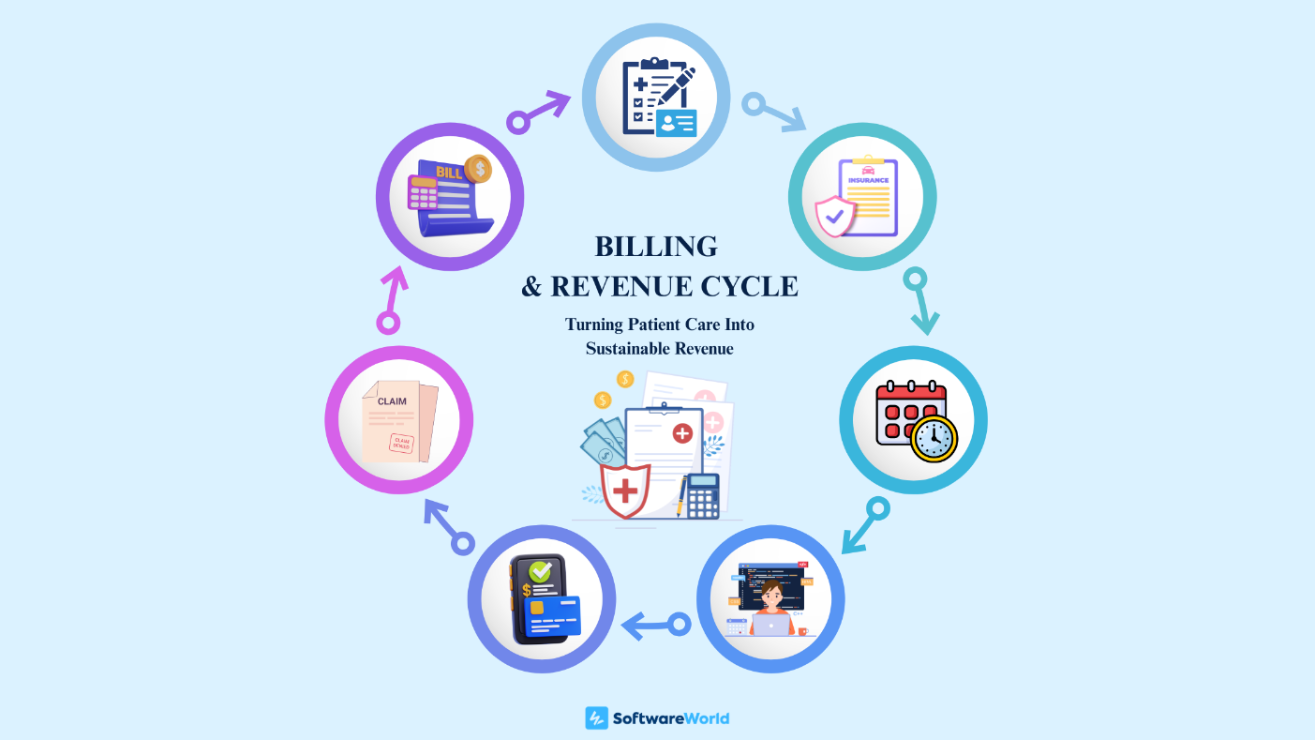
Billing in PT isn't that complex compared to other healthcare areas. But it has enough rules that mistakes are easy. And the mistakes are often invisible until you go looking for them.

CCI edits are one of the biggest traps. These are rules that block certain CPT code pairs from being billed in the same visit. They're not obvious at all. You can treat a patient exactly right and still generate a bad claim because of a code pairing issue. Most clinics find out about CCI problems through denials. Not before the claim goes out.

Write this number down somewhere: a practice billing $800,000 per year at a 92% collection rate versus 97% is leaving $40,000 behind every year. Not from major mistakes. From denials that sat too long, appeals that never got filed, and small errors a scrubber would have caught. That's $40,000 in money you already earned but never collected.

And denial rates run up to 15% on the first pass across the industry. Every denied claim means someone has to review it, fix it, and resubmit. That takes time. Time that doesn't generate any new revenue. It just recovers what was already yours.

Billing and Revenue Cycle Management Infographic
Width: 0px, Height: 0px
Width: 1403px, Height: 789px
Width: 1401px, Height: 788px
Width: 1385px, Height: 779px
Width: 1361px, Height: 765px
Width: 1349px, Height: 759px
Width: 1339px, Height: 753px
Width: 1332px, Height: 749px
Width: 1320px, Height: 742px
Width: 1316px, Height: 740px
Width: 1309px, Height: 736px
Width: 1303px, Height: 733px
Width: 1292px, Height: 727px
Width: 1289px, Height: 725px
Width: 1280px, Height: 720px
Width: 1271px, Height: 715px
Width: 1263px, Height: 710px
Width: 1256px, Height: 706px
Width: 1248px, Height: 702px
Width: 1247px, Height: 701px
Width: 1244px, Height: 700px
Width: 1239px, Height: 697px
Width: 1235px, Height: 695px
Width: 1231px, Height: 692px
Width: 1229px, Height: 691px
Width: 1227px, Height: 690px
Width: 1237px, Height: 696px
Width: 1240px, Height: 697px
Width: 1241px, Height: 698px
Width: 1243px, Height: 699px
Width: 1248px, Height: 702px
Width: 1249px, Height: 702px
Width: 1251px, Height: 704px
Width: 1253px, Height: 705px
Width: 1256px, Height: 706px
Width: 1257px, Height: 707px
Width: 1259px, Height: 708px
Width: 1260px, Height: 709px
Width: 1261px, Height: 709px
Width: 1265px, Height: 711px
Width: 1267px, Height: 713px
Width: 1268px, Height: 713px
Width: 1271px, Height: 715px
Width: 1273px, Height: 716px
Width: 1275px, Height: 717px
Width: 1276px, Height: 718px
Width: 1279px, Height: 719px
Width: 1283px, Height: 722px
Width: 1289px, Height: 725px
Width: 1291px, Height: 726px
Width: 1295px, Height: 728px
Width: 1296px, Height: 729px
Width: 1297px, Height: 729px
Width: 1299px, Height: 731px
Width: 1300px, Height: 731px
Width: 1303px, Height: 733px
Width: 1304px, Height: 733px
Width: 1309px, Height: 736px
Width: 1311px, Height: 737px
Width: 1312px, Height: 738px
Width: 1313px, Height: 738px
Width: 1315px, Height: 740px
Width: 1315px, Height: 0px
Width: 1315px, Height: 740px


» Clearinghouses & Eligibility Verification

ToolBest ForApprox. PriceWhat Makes It
Worth Evaluating
AvailityInsurance eligibility
verification
FreeReal-time checks across 200+ payers;
fastest path to pre-auth confirmation
TriZettoClaims clearinghouse
 for large practices
Contact for pricingHigh-volume clearinghouse;
broad payer network;
 reliable at scale
WaystarEnd-to-end
 RCM platform
Contact for pricingClaim scrubbing, denial management,
and patient payment in one platform
WebPT BillingPT-specific
 managed billing
% of collectionsOutsourced billing staffed by
people who know PT billing specifically
CollaborateMDIntegrated billing
 + EMR flexibility
Contact for pricingWorks with multiple EMRs;
 Good choice for practices mid-switch
 on their PMS

Outsourced billing gets a bad rap because of the percentage fee. But think about what you're comparing it to. If you or your office manager is doing billing on the side of everything else, or if your team's denial appeal rate is below 90%, outsourcing to a PT billing specialist almost certainly costs less than what you're already losing. Run the numbers before dismissing it.

» Patient Payment & Copay Collection

ToolBest ForApprox. PriceWhat Makes It
Worth Evaluating
StripeCard-on-file and online payments2.7% + $0.05/transactionEasiest to connect to most PT EMRs;
clean card-on-file experience
SquareIn-clinic point-of-sale2.6% + $0.10/transactionPhysical terminal + software;
 solid front-desk payment experience
CollectlyPatient balance collectionContact for pricingAutomated follow-up on outstanding balances;
 reduces manual collection calls
CareCreditPatient financing for larger balancesNo monthly feeAutomated follow-up on outstanding balances;
 reduces manual collection calls

One simple change that makes a real difference: collect copays at check-in, before the patient goes back. Not on the way out. Not by invoice later. Collection rates drop hard once a patient leaves the building. Card-on-file with a clear pre-visit policy makes this easy for everyone.

 3. Home Exercise Programs — Don't Treat This as a Footnote

HEP platforms get two paragraphs near the end of most software guides. That's wrong. Patient follow-through on home exercises is one of the strongest predictors of recovery speed, total visits needed, and re-injury rates. If your HEP system isn't working, your clinical results suffer.

You May Also Like: List of Best Home Health Care Software

Traditional HEP delivery had some structural problems that anyone who's worked in healthcare content long enough has seen documented repeatedly. The therapist sees compliance data before the next session and can adjust accordingly. That feedback loop is clinically valuable, and it also reduces the session time spent re-explaining exercises that a patient forgot since last week. Modern platforms have closed most of those gaps. 

There is also a billing dimension that entered the picture in recent years. CMS added Remote Therapeutic Monitoring CPT codes — specifically 98980 and 98981 — that allow therapists to bill Medicare and some commercial plans for time spent reviewing and managing patient-reported outcome data between visits. For a practice that is already tracking home exercise compliance digitally, this creates a billable revenue stream from work the clinical team was doing anyway.

ToolBest ForApprox. PriceWhat Makes It
Worth Evaluating
PhysitrackMost PT clinics: HEP + RTM~$49/mo per practitioner2,500+ exercise videos;
 RTM billing is ready. built-in pain tracking
MedBridgeLarge clinics and health systems~$200/mo per practitionerClinical education + HEP in one platform;
 strong outcomes Measurement tools
HEP2goBudget-focused and solo practicesFree – $30/moLow barrier to entry;
 video-guided; straightforward to use
Keet HealthOutcome-focused practicesContact for pricingRTM billing support is built in.
 patient engagement tools that go beyond HEP
WebExercisesClinics that want customization control~$40/mo per practitionerEditable exercise videos;
 custom branding; detailed progress reporting

“RTM billing — the fine print:  CPT 98980 requires 20+ minutes of documented clinician time reviewing patient-reported data per patient per calendar month. It is not passive monitoring. Before you build RTM into your revenue projections, confirm your HEP platform generates the audit trail CMS actually requires. Not all of them do.”

› 4. Patient Communication — The No-Show Fix Is Pretty Simple

Physical therapy software has a dropout problem that is somewhat unique in healthcare. A patient comes in for an initial evaluation, the therapist builds a 12-visit plan of care, insurance authorizes eight visits, and by visit four, the patient stops showing up because they feel 'good enough.' Practices that do not systematically communicate between sessions — check-ins, progress reinforcement, reminders of the goal the patient came in with — lose patients who would have benefited from completing their plan of care.

The data on automated reminders in PT is consistent with what other healthcare sectors have found: automated multi-channel reminders reduce no-shows by 23 to 45% compared to practices relying on front-desk phone calls alone. At $70 to $150 per session, trimming even 2% off your no-show rate adds thousands of dollars per therapist per year. It's probably the fastest revenue recovery most clinics can make.

Two-way texting is the feature to look for. When a patient can reply to confirm or reschedule, response rates go way up. And a patient who texts at 6 pm to cancel a 9 am slot gives your front desk a real shot at filling it. A patient who just doesn't show? Nothing. No warning, no chance to recover that slot.

ToolBest ForApprox. PriceWhat Makes It
Worth Evaluating
KlaraPT-friendly two-way
 messaging
~$300/moHIPAA-compliant two-way texting;
 meaningful reduction in front-desk phone volume
DoctorConnectAutomated multi-channel
reminders
Contact for pricingMulti-channel campaigns;
 integrates with 200+ EMR systems
Luma HealthPatient engagement
and recall campaigns
~$200/moSmart reminders; waitlist management;
 post-visit follow-up sequences
RelatientEnterprise patient
communication
Contact for pricingBroadcast messaging;
 campaign management, and analytics dashboard
NexHealthOnline booking
 + communication combined
~$400/moReal-time scheduling + reminders
 + digital intake in one system

› 5. Telehealth — The Uncertainty Is Over.

The policy uncertainty is over. CMS made audio-only therapy assessments permanent starting January 1, 2025. Congress extended broader telehealth access through September 2025, with physical therapists still on the list. This isn't temporary ground anymore. You can build telehealth into your service model without worrying it'll be pulled back.

Results also came back better than expected. A 2024 review found telehealth PT attendance was 8% higher than in-person. Home exercise follow-through was 9% higher, too. The attendance thing makes sense. A video visit has almost no friction. No drive, no parking, no rearranging a work schedule. For patients juggling demanding jobs or long commutes — which is a lot of outpatient caseloads, honestly, that convenience gap shows up directly in adherence numbers. 

You May Also Like: Top Rated Telemedicine Software

In practice, most clinics that have integrated telehealth successfully have landed on a hybrid model, and it's the approach worth recommending in any implementation-focused content. A session spent checking form, discussing pain, and tweaking a home program works fine on video. And for PTs who've built a specialty in a specific area, telehealth means you can serve patients anywhere, not just in your town.

ToolBest ForApprox. PriceWhat Makes It
Worth Evaluating
WebPT TelehealthPractices already on WebPTBundled or add-onZoom for Healthcare powered,
 256-bit encryption and HIPAA-compliant
SPRY TelehealthSPRY EMR usersBundled with SPRY1080p video;
HEP assignment integrated during the session.
 screen sharing
Doxy.meAny EMR, fast implementationFree – $35/moNo patient download required.
 browser-based;
 clean waiting room UX
PtEverywhereCash-based and telehealth-first clinicsContact for pricingTelehealth native;
 strong async photo review for remote assessment
Zoom for HealthcareEnterprise practices~$200/moHIPAA BAA available;
 familiar interface for patients;
 breakout room support

› 6. Outcome Measurement — Show That the Work Actually Worked

For a long time, outcomes in PT meant asking patients to rate pain from 1 to 10 at the start of each visit. Still common. But that number doesn't prove anything to you, to a payer, or to a surgeon deciding where to send their next patient.

Standardized outcome tools are different. The LEFS for lower extremity, the DASH for upper extremity, the Oswestry for low back, and the Global Rating of Change. These give you real, validated data on how a patient's function changes through treatment. Collected electronically at intake and throughout care, they build a record that supports auto-renewals, helps with payer conversations, and gives referring doctors something concrete to look at.

Most practices haven't used this data for referral development. But they should. A sports medicine doctor choosing between two PT clinics will lean toward the one that sends back actual outcome data on patients like theirs. Not a satisfaction survey. Real functional improvement numbers. That's a different level of trust.

ToolBest ForApprox. PriceWhat Makes It
Worth Evaluating
WebPT OutcomesWebPT usersIncluded in higher tiersFOTO integration;
Standardized functional scales; payer-facing reporting
FOTO (Clinicient)Benchmark-focused practicesContact for pricingNational outcomes database;
 Comparison against peer practices by patient type
MedBridgeEducation + outcomes combined~$200/mo per practitionerOutcomes tools embedded in
 the same platform as HEP and clinical education
Keet HealthRemote patient monitoring focusContact for pricingRTM + outcomes in one system;
 Solid patient-reported data collection

› 7. Website and Local SEO — Patients Are Googling You Before Anyone Refers Them.

Physiotherapy has a referral model that is partly physician-driven and partly consumer-driven, and the proportions are shifting. Direct access —where patients can see a PT without a physician referral — is now legal in all 50 states. The share of patients who search for a PT independently, rather than following a referral, has grown meaningfully as a result. A PT practice with a weak online presence is increasingly leaving direct-access patients to competitors who have invested in the channel.

Google Business Profile is still the highest-leverage free tool most practices haven't fully set up. Not just claimed, but actually maintained. Condition-specific service descriptions, regular photo updates, and review responses that are specific enough to show someone actually read what the patient wrote rather than pasting in the same reply every time. Google uses all of it. A GBP set up once and left alone isn't working as hard as it should.

» Website Platforms

ToolBest ForApprox. PriceWhat Makes It
Worth Evaluating
Therapy Brands SitesPT-specific website platform~$300/moBuilt-in SEO framework;
 Online booking integration; PT-focused content library
PatientSitesRehab-specific site builder~$200/moTemplates designed for PT, OT, and chiro;
 Google Maps integration
SquarespaceModern DIY builder$23–65/moClean design; manageable without a developer;
 Reasonable for new clinics
WordPress + WP EngineMaximum SEO flexibility$23–65/moFull technical SEO control;
 Requires comfort with WordPress

» Local SEO & Listing Management

Website and Local SEO business infographic
Width: 0px, Height: 0px
Width: 1402px, Height: 788px
Width: 1391px, Height: 782px
Width: 1369px, Height: 770px
Width: 1362px, Height: 766px
Width: 1354px, Height: 761px
Width: 1346px, Height: 757px
Width: 1339px, Height: 753px
Width: 1329px, Height: 747px
Width: 1322px, Height: 743px
Width: 1321px, Height: 743px
Width: 1318px, Height: 741px
Width: 1313px, Height: 738px
Width: 1311px, Height: 737px
Width: 1310px, Height: 737px
Width: 1305px, Height: 734px
Width: 1301px, Height: 732px
Width: 1293px, Height: 727px
Width: 1282px, Height: 721px
Width: 1279px, Height: 719px
Width: 1271px, Height: 715px
Width: 1267px, Height: 713px
Width: 1263px, Height: 710px
Width: 1262px, Height: 710px
Width: 1261px, Height: 709px
Width: 1259px, Height: 708px
Width: 1257px, Height: 707px
Width: 1254px, Height: 705px
Width: 1253px, Height: 705px
Width: 1250px, Height: 703px
Width: 1249px, Height: 702px
Width: 1246px, Height: 701px
Width: 1245px, Height: 700px
Width: 1247px, Height: 701px
Width: 1250px, Height: 703px
Width: 1254px, Height: 705px
Width: 1257px, Height: 707px
Width: 1265px, Height: 711px
Width: 1273px, Height: 716px
Width: 1278px, Height: 719px
Width: 1281px, Height: 720px
Width: 1282px, Height: 721px
Width: 1283px, Height: 722px
Width: 1286px, Height: 723px
Width: 1289px, Height: 725px
Width: 1290px, Height: 725px
Width: 1291px, Height: 726px
Width: 1294px, Height: 728px
Width: 1298px, Height: 730px
Width: 1306px, Height: 734px
Width: 1307px, Height: 735px
Width: 1311px, Height: 737px
Width: 1313px, Height: 738px
Width: 1314px, Height: 739px
Width: 1317px, Height: 741px
Width: 1319px, Height: 742px
Width: 1322px, Height: 743px
Width: 1321px, Height: 743px
Width: 1319px, Height: 742px
Width: 1318px, Height: 741px
Width: 1315px, Height: 740px
Width: 1314px, Height: 739px
Width: 1311px, Height: 737px
Width: 1310px, Height: 737px
Width: 1313px, Height: 738px
Width: 1315px, Height: 740px
Width: 1319px, Height: 742px
Width: 1315px, Height: 740px
Width: 1315px, Height: 0px
Width: 1315px, Height: 740px


ToolBest ForApprox. PriceWhat Makes It
Worth Evaluating
BrightLocalLocal rank tracking + citations~$29/moCitation building across directories;
 monitors local rank position over time
Moz LocalListing consistency management~$14/moSyncs practice info across 70+ directories;
catches inconsistencies automatically
SemrushFull SEO suite~$140/moKeyword research; condition-specific content strategy;
Competitor gap analysis
HealthgradesPatient discovery platformFree + paid tierHigh-trust patient research destination;
Visibility here matters for PT credibility

› 8. Paid Advertising — Where Direct-Access Patients Actually Come From

When someone with knee pain decides they're done waiting and searches Google, that's one of the highest intent moments you'll ever get. Google Ads puts your practice right in front of it. For PT specifically, this channel barely existed at scale before direct access. A lot of practices still haven't taken it seriously.

Condition-specific campaigns beat generic ones by a wide margin. "Rotator cuff PT" is someone who has decided that they want PT and is picking where. "PT near me" is much fuzzier. The intent level is just different. A landing page built around rotator cuff rehab, covering what treatment actually involves and what a realistic timeline looks like, will convert far better than sending that same visitor to a generic homepage. 

Meta ads on Facebook and Instagram do something different. They're not about capturing people who are already searching. They're for reaching people aged 45 to 65 with joint problems or recovering from surgery before the idea of seeking PT has even crossed their mind. Short video that shows what modern PT actually looks like tends to work well here. Most people's picture of physical therapy is outdated.

ToolBest ForApprox. PriceWhat Makes It
Worth Evaluating
Google AdsHigh-intent direct access patients$500–2,000/mo budgetCondition-specific campaigns;
 call extensions for mobile; precise local targeting
Meta AdsCondition awareness before patients search$500–1,500/mo budgetAge and interest targeting;
 video format for updating outdated PT perceptions
Google LSALocal service adsPay-per-leadGoogle-guaranteed badge;
 prominent placement above standard search results

› 9. Digital Intake — Stop Wasting the First 10 Minutes of Every First Visit

Intake in PT needs more detail than most other healthcare specialties. injury history, prior treatment, functional goals, pain behavior patterns, activity level, work demands, sport or recreational involvement. Paper forms capture almost none of this well. Patients rush through them in the waiting room. Handwriting needs decoding. Staff re-enters it manually. It's slow, and the quality is poor.

Digital intake sent by text before the visit gets filled out much more carefully. The Patient is at home and actually takes the time to think through their answers. More importantly, when that form arrives before the visit, your therapist can read it before the patient walks in. Those first 10 to 15 minutes, in most cases, are toward gathering history? Now available for real clinical work. For practices where the quality of eval is the selling point, that's a meaningful difference.

ToolBest ForApprox. PriceWhat Makes It
Worth Evaluating
IntakeqHIPAA forms + intake automation~$49/moClean patient-facing forms; Auto-populates into most EMRs;
supports e-signatures
YapiDental and PT digital intake~$300/moDeep EMR integration;
 Consent management built in; intake analytics
Jotform HIPAACustom forms with compliance tier~$39/moHighly customizable; works with any EMR via export;
 HIPAA-compliant plan available
FormstackEnterprise-grade custom forms~$50/moComplex conditional logic;
Multi-step forms; HIPAA-compliant tier available

› 10. Social Media — It's About Credibility, Not Followers

Social media for a PT practice isn't about going viral. The real goal is staying visible to the people who influence where patients go: surgeons, sports medicine docs, athletic trainers, and coaches. And being findable by patients doing their own research.

Exercise demo videos work best for this. Short clips on Reels, TikTok, or YouTube Shorts showing a movement pattern with a clear explanation of what it targets and why. Or breaking down a rehab progression for a common injury. Also, this builds real clinical credibility. Physicians, orthopedic surgeons, sports medicine doctors, and athletic trainers who follow a PT clinic's social presence see the clinical reasoning behind treatments, the types of patients the clinic serves well, and the outcomes patients experience.

Patient recovery stories, told with appropriate consent and enough specificity to be meaningful, perform well, too. 'Patient returned to marathon running six months after knee replacement' is a specific outcome that resonates with a very specific potential patient population.

ToolBest ForApprox. PriceWhat Makes It
Worth Evaluating
HootsuiteMulti-platform scheduling~$99/moSchedule across all platforms;
 Team collaboration and post approval workflows
BufferSimpler scheduling for smaller teams~$18/moClean interface; solid analytics;
 practical for single-location clinics
LaterVideo-first content planning~$18/moClean interface; solid analytics;
practical for single-location clinics
Canva ProNon-designer content creation~$13/moExercise infographic templates;
 anatomy illustrations; correct social sizing

› 11. Accounting, Payroll & Knowing Your Numbers

Running the finances in a PT practice comes with a few quirks. Insurance payments come in 30 to 45 days after service, so your cash position rarely reflects what you've actually produced. Mix insurance and cash-pay revenue in the same report, and the margins blur together. Therapist productivity metrics like visits per day and revenue per visit by payer generally won't show up in standard accounting software without a custom setup.

QuickBooks Online is where most small to mid-size practices land by default, largely because PT-focused accountants who know how to configure it properly are not hard to find. And honestly, that accountant matters more than the software itself. Someone who understands reimbursement lag, knows how to separate revenue streams cleanly, and tracks PT-specific productivity metrics will do more for the business than any tool switch will. Xero tends to work better for more complex ownership structures. But whatever platform a practice chooses, a simple weekly dashboard that someone actually reads and acts on will outperform sophisticated software that nobody opens.

ToolBest ForApprox. PriceWhat Makes It
Worth Evaluating
QuickBooks OnlineMost PT practices~$30–90/moSchedule across all platforms;
 Team collaboration and post approval workflows
XeroMulti-entity or cloud-first practices~$15–78/moClean interface; solid analytics;
 practical for single-location clinics
GustoPayroll for PT staff~$40 + $6/person/moClean interface; solid analytics;
practical for single-location clinics
ADPLarger groups and multi-location practicesContact for pricingExercise infographic templates;
 anatomy illustrations; correct social sizing

› 12. HIPAA & Security — Not Optional, But Not That Scary Either

Every piece of PT records is protected as Health Information. Eval findings, notes, treatment plans, billing data, all of it. Every vendor with access to that data needs a signed Business Associate Agreement, and every staff member who touches patient records needs documented HIPAA training on file. Fines run from $100 to $50,000 per violation, with annual caps reaching $1.9 million per violation category.

For most PT clinics, the realistic threat isn't a sophisticated cyberattack. It's ransomware landing on an aging front desk computer, or a staff member emailing a patient form to the wrong address because the secure method had one too many steps. Both scenarios happen far more often than most practice owners expect. The practical response to both is the same: endpoint security on every device that touches patient data, encrypted email as the default for anything PHI-related, and offsite backups that make it possible to restore without negotiating with whoever locked your system.

“Short version: Facing an audit without documentation of training and signed agreements costs far, far more.”
ToolBest ForApprox. ForWhat Makes It
Worth Evaluating
Compliancy GroupHIPAA compliance management~$99/moGuided risk assessment;
BAA tracking; documentation that holds up in an audit
HIPAAmateStaff training + policy library~$50/moOnline training modules;
 Policy templates: tracks completion per staff member
VirtruEncrypted email~$5/user/moHIPAA-compliant encryption built into Gmail and Outlook;
Minimal workflow change
CarboniteAutomated cloud backup~$300/yearEncrypted offsite backup;
Ransomware recovery: fast restore capability
CrowdStrike FalconEndpoint security~$8/user/moAI-based threat detection across
All clinic workstations, laptops, and tablets

› 13. Physician Referral Management — Most Clinics Run This on a Handshake

If your practice still depends mainly on physician referrals, which most practices do even as direct access grows, that relationship is your most valuable business asset. One surgeon who sends five post-op patients per month generates more revenue than most ad campaigns. And yet most PT clinics manage these relationships with personal visits, faxed notes, and hope. No tracking. No pipeline. No way to know when a good referral source goes quiet.

Digital referral tools change that. They give referring docs something they actually want: visibility into what happens to their patients after the referral. A simple portal where a surgeon can see that Mrs. Jones was scheduled and is progressing through care. That's something they don't have otherwise. For your practice, it makes the whole pipeline visible. Who's sending patients? Who stopped. Who might respond to a check-in?

Even without software, a monthly one-page outcome summary to your top referral sources is one of the best habits a PT practice can build. Patients referred, visits completed, and functional improvement scores. Most clinics don't do this. The ones that do are remembered very differently.

ToolBest ForApprox. PriceWhat Makes It
Worth Evaluating
ReferralMDDigital referral network managementContact for pricingPhysician portal; referral tracking;
Automated status updates to referring docs
Kyruus HealthEnterprise referral managementContact for pricingProvider directory; intelligent referral routing;
Analytics layer
DrChronoReferral + EMR combined~$199/mo per providerE-referrals embedded in EMR workflow;
 Significantly reduces fax dependency

› The Right Stack for Each Stage of Your Practice

The right tools heavily depend on where you are in the growth curve. Even without dedicated software, the practice of sending physicians structured monthly outcome summaries — patients referred, visits completed, functional improvement by standardized measure — builds a referral relationship on clinical credibility rather than just personal rapport

» New or Solo Practice — roughly $1,200 to $2,500/month, all in

CategoryRecommended Approach
EMR / PMSJane App or WebPT base plan (~$99/user/mo); Jane is easier to onboard front desk staff
BillingAvaility for eligibility (free) + EMR built-in billing, or outsourced at % of collections
HEPHEP2go free tier to start; upgrade to Physitrack (~$49/mo) once volume justifies it
CommunicationDoctorConnect or Luma Health (~$200/mo); get the automated reminders running early
TelehealthDoxy.me free tier — no cost, no patient download required, HIPAA compliant
WebsiteSquarespace (~$35/mo) + Google Business Profile fully optimized (free)
AdvertisingGoogle Ads at $500–1,000/mo targeting 2–3 condition-specific searches
AccountingQuickBooks Online Simple Start (~$30/mo)
PayrollGusto Core (~$70–100/mo)
HIPAACompliance Group (~$99/mo) — not optional, even from day one

» Established Single-Location Practice — roughly $3,500 to $6,000/month

CategoryRecommended Approach
EMR / PMSWebPT (full platform), Prompt, or SPRY — based on your live workflow evaluation
BillingInternal biller using Waystar or CollaborateMD, or outsourced RCM at 4–7% of collections
HEP + RTMPhysitrack or Keet Health; activate RTM billing if your Medicare volume supports it
CommunicationKlara or NexHealth (~$300–400/mo); confirm two-way texting is included before signing
OutcomesFOTO or WebPT Outcomes: start sending outcome summaries to your top three referral sources
TelehealthWebPT Telehealth or SPRY telehealth (bundled with your EMR)
Website + SEOTherapy Brands or PatientSites (~$300/mo) + BrightLocal (~$29/mo)
AdvertisingGoogle Ads + Meta Ads, $1,500–3,000/mo combined
AccountingQuickBooks Online + Gusto (~$160/mo combined)
HIPAA + SecurityCompliancy Group + Carbonite + CrowdStrike (~$450/mo combined)

» Multi-Location Group — $12,000+ per month, highly variable by site count

CategoryRecommended Approach
EMR / PMSRaintree Systems or Prompt Enterprise — built for centralized multi-site operations
BillingFully outsourced RCM or dedicated billing department using Waystar at the enterprise tier
AnalyticsRaintree or WebPT analytics layer + Tableau or Power BI for cross-location benchmarking
MarketingRegional digital marketing agency with healthcare specialization ($5,000–12,000/mo)
Referral MgmtReferralMD or Kyruus for systematic, trackable physician relationship management
HRADP TotalSource or Rippling for multi-state compliance and benefits administration
SecurityCrowdStrike Enterprise + managed IT security provider + documented incident response plan

› Where to Start If You're Building or Rebuilding

The most common mistake in PT practice technology is building the stack in the wrong order. Practices add a social media scheduling tool before they have a functional billing workflow. They invest in a website before their Google Business Profile is complete. They buy a sophisticated HEP platform before they have addressed the no-show problem that is keeping their schedule from being full. 

The order matters. Start with the EMR and get billing right — that is where the revenue is. Add a home exercise platform next, because it directly improves clinical outcomes and opens the RTM billing revenue stream. Then layer in patient communication automation, because every percentage point reduction in no-shows feeds directly into the utilization of the clinical capacity you already have. Everything else — website, advertising, social, referral management — builds on top of a foundation that is operationally sound.

The PT practices growing most sustainably in 2025 are not the ones with the most tools. They are the ones where the therapist finishes documentation before the next patient arrives, claims go out clean and get paid, and patients show up because the communication between sessions gives them a reason to.

  • EMR and billing first. Get claims going out clean before investing in anything else.
  • HEP platform second. It improves clinical outcomes directly and opens the RTM billing stream without adding much overhead.
  • Patient communication automation third. Every percentage point off the no-show rate goes straight into the utilization of the capacity you already have.
  • Website, advertising, social, and referral management after that — built on top of an operation that's actually working, not in place of one.
“The practices I’ve watched grow steadily are not the ones with the most software. They’re the ones where documentation gets done before the next patient arrives, claims go out clean, and patients actually show up.”

Read Similar Blogs

Background Check Adjudication: What It is and Why You Need It?

Picture this. You’re in the middle of your hiring process. You’ve shortlisted some outstanding candidates out of the hundreds of applicants. In fact, the process of background checks on these prospective employees is about to come to an end, too. And

Read More

5 Best Practices for Software Review Analysis

Software reviews matter—a lot. They directly impact how people perceive your product and, ultimately, whether they'll choose to use it. Research shows that a staggering 89% of consumers read online reviews before making a purchase. But it's not just about collecting

Read More

Top 11 Python Frameworks for Web Development

Python is arguably one of the best programming languages. Recently, it surpassed Java in popularity. In part, the language owes its success to the dynamic and best web frameworks that make Python development possible. Google Search Trends for 2019 placed Python

Read More
Get Expert Help