
On this page
Imagine you’re eager to hear what your customers think about your latest product. You decide to send out a survey, but with thousands of customers, how do you make sure you’re capturing a true reflection of their opinions?
This is where Systematic Sampling and Cluster Sampling come into play—two strategies that can transform how you gather and interpret customer feedback.
Also Read: How to Gather Customer Feedback?
Choosing the right sampling technique depends on your survey goals and the makeup of your customer base.
In this post, we’ll explore the nuances of both sampling methods, examine their unique advantages, and help you determine which strategy aligns best with your survey goals.
» What is Systematic Sampling?
Systematic Sampling is like setting a rhythm for your survey distribution. Instead of randomly selecting participants, you choose every nth customer from your list.

Width: 603px, Height: 239px
Width: 0px, Height: 0px
Width: 1284px, Height: 510px
Width: 1283px, Height: 509px
Width: 1280px, Height: 508px
Width: 1273px, Height: 505px
Width: 1272px, Height: 505px
Width: 1269px, Height: 504px
Width: 1263px, Height: 501px
Width: 1258px, Height: 499px
Width: 1254px, Height: 498px
Width: 1252px, Height: 497px
Width: 1250px, Height: 496px
Width: 1249px, Height: 496px
Width: 1247px, Height: 495px
Width: 1244px, Height: 494px
Width: 1240px, Height: 492px
Width: 1238px, Height: 492px
Width: 1235px, Height: 490px
Width: 1234px, Height: 490px
Width: 1232px, Height: 489px
Width: 1230px, Height: 488px
Width: 1223px, Height: 486px
Width: 1218px, Height: 484px
Width: 1214px, Height: 482px
Width: 1209px, Height: 480px
Width: 1205px, Height: 478px
Width: 1200px, Height: 476px
Width: 1197px, Height: 475px
Width: 1193px, Height: 474px
Width: 1187px, Height: 471px
Width: 1184px, Height: 470px
Width: 1172px, Height: 465px
Width: 1168px, Height: 464px
Width: 1162px, Height: 461px
Width: 1160px, Height: 461px
Width: 1155px, Height: 459px
Width: 1154px, Height: 458px
Width: 1148px, Height: 456px
Width: 1147px, Height: 455px
Width: 1143px, Height: 454px
Width: 1140px, Height: 453px
Width: 1139px, Height: 452px
Width: 1137px, Height: 451px
Width: 1133px, Height: 450px
Width: 1132px, Height: 449px
Width: 1128px, Height: 448px
Width: 1127px, Height: 447px
Width: 1123px, Height: 446px
Width: 1120px, Height: 445px
Width: 1119px, Height: 444px
Width: 1115px, Height: 443px
Width: 1104px, Height: 438px
Width: 1099px, Height: 436px
Width: 1097px, Height: 436px
Width: 1092px, Height: 434px
Width: 1089px, Height: 432px
Width: 1085px, Height: 431px
Width: 1083px, Height: 430px
Width: 1083px, Height: 430px
Width: 1082px, Height: 430px
Width: 1078px, Height: 428px
Width: 1074px, Height: 426px
Width: 1073px, Height: 426px
Width: 1072px, Height: 426px
Width: 1069px, Height: 424px
Width: 1067px, Height: 424px
Width: 1063px, Height: 422px
Width: 1062px, Height: 422px
Width: 1055px, Height: 419px
Width: 1054px, Height: 418px
Width: 1050px, Height: 417px
Width: 1045px, Height: 415px
Width: 1043px, Height: 414px
Width: 1039px, Height: 413px
Width: 1035px, Height: 411px
Width: 1034px, Height: 411px
Width: 1032px, Height: 410px
Width: 1030px, Height: 409px
Width: 1029px, Height: 409px
Width: 1028px, Height: 408px
Width: 1027px, Height: 408px
Width: 1023px, Height: 406px
Width: 1022px, Height: 406px
Width: 1014px, Height: 403px
Width: 1010px, Height: 401px
Width: 1008px, Height: 400px
Width: 1007px, Height: 400px
Width: 1003px, Height: 398px
Width: 998px, Height: 396px
Width: 993px, Height: 394px
Width: 988px, Height: 392px
Width: 983px, Height: 390px
Width: 979px, Height: 389px
Width: 972px, Height: 386px
Width: 968px, Height: 384px
Width: 964px, Height: 383px
Width: 954px, Height: 379px
Width: 948px, Height: 376px
Width: 945px, Height: 375px
Width: 940px, Height: 373px
Width: 938px, Height: 372px
Width: 935px, Height: 371px
Width: 934px, Height: 371px
Width: 925px, Height: 367px
Width: 924px, Height: 367px
Width: 922px, Height: 366px
Width: 917px, Height: 364px
Width: 912px, Height: 362px
Width: 905px, Height: 359px
Width: 898px, Height: 357px
Width: 892px, Height: 354px
Width: 887px, Height: 352px
Width: 884px, Height: 351px
Width: 877px, Height: 348px
Width: 874px, Height: 347px
Width: 873px, Height: 347px
Width: 870px, Height: 345px
Width: 870px, Height: 345px
Width: 869px, Height: 345px
Width: 863px, Height: 343px
Width: 862px, Height: 342px
Width: 862px, Height: 342px
Width: 858px, Height: 341px
Width: 857px, Height: 340px
Width: 853px, Height: 339px
Width: 852px, Height: 338px
Width: 849px, Height: 337px
Width: 845px, Height: 335px
Width: 838px, Height: 333px
Width: 833px, Height: 331px
Width: 830px, Height: 330px
Width: 822px, Height: 326px
Width: 818px, Height: 325px
Width: 813px, Height: 323px
Width: 808px, Height: 321px
Width: 805px, Height: 320px
Width: 804px, Height: 319px
Width: 802px, Height: 318px
Width: 800px, Height: 318px
Width: 798px, Height: 317px
Width: 798px, Height: 317px
Width: 793px, Height: 315px
Width: 792px, Height: 314px
Width: 788px, Height: 313px
Width: 785px, Height: 312px
Width: 783px, Height: 311px
Width: 777px, Height: 308px
Width: 775px, Height: 308px
Width: 767px, Height: 305px
Width: 762px, Height: 303px
Width: 754px, Height: 299px
Width: 750px, Height: 298px
Width: 747px, Height: 297px
Width: 744px, Height: 295px
Width: 740px, Height: 294px
Width: 738px, Height: 293px
Width: 735px, Height: 292px
Width: 732px, Height: 291px
Width: 729px, Height: 289px
Width: 728px, Height: 289px
Width: 727px, Height: 289px
Width: 725px, Height: 288px
Width: 723px, Height: 287px
Width: 720px, Height: 286px
Width: 719px, Height: 285px
Width: 717px, Height: 285px
Width: 714px, Height: 283px
Width: 713px, Height: 283px
Width: 710px, Height: 282px
Width: 708px, Height: 281px
Width: 705px, Height: 280px
Width: 704px, Height: 280px
Width: 702px, Height: 279px
Width: 700px, Height: 278px
Width: 699px, Height: 278px
Width: 697px, Height: 277px
Width: 694px, Height: 276px
Width: 692px, Height: 275px
Width: 687px, Height: 273px
Width: 683px, Height: 271px
Width: 680px, Height: 270px
Width: 678px, Height: 269px
Width: 677px, Height: 269px
Width: 672px, Height: 267px
Width: 669px, Height: 266px
Width: 668px, Height: 265px
Width: 665px, Height: 264px
Width: 664px, Height: 264px
Width: 662px, Height: 263px
Width: 660px, Height: 262px
Width: 658px, Height: 261px
Width: 657px, Height: 261px
Width: 657px, Height: 261px
Width: 657px, Height: 261px
Width: 657px, Height: 261px
Width: 655px, Height: 260px
Width: 654px, Height: 260px
Width: 652px, Height: 259px
Width: 649px, Height: 258px
Width: 648px, Height: 257px
Width: 647px, Height: 257px
Width: 645px, Height: 256px
Width: 645px, Height: 256px
Width: 642px, Height: 255px
Width: 639px, Height: 254px
Width: 638px, Height: 253px
Width: 637px, Height: 253px
Width: 634px, Height: 252px
Width: 633px, Height: 251px
Width: 632px, Height: 251px
Width: 629px, Height: 250px
Width: 629px, Height: 250px
Width: 627px, Height: 249px
Width: 625px, Height: 248px
Width: 623px, Height: 247px
Width: 620px, Height: 246px
Width: 618px, Height: 245px
Width: 615px, Height: 244px
Width: 614px, Height: 244px
Width: 612px, Height: 243px
Width: 608px, Height: 241px
Width: 602px, Height: 239px
Width: 600px, Height: 238px
Width: 600px, Height: 238px
Width: 598px, Height: 237px
Width: 597px, Height: 237px
Width: 595px, Height: 236px
Width: 594px, Height: 236px
Width: 595px, Height: 236px
Width: 597px, Height: 237px
Width: 598px, Height: 237px
Width: 599px, Height: 238px
Width: 600px, Height: 238px
Width: 602px, Height: 239px
Width: 602px, Height: 239px
Width: 599px, Height: 238px
Width: 599px, Height: 238px
Width: 598px, Height: 237px
Width: 595px, Height: 236px
Width: 595px, Height: 236px
Width: 598px, Height: 237px
Width: 599px, Height: 238px
Width: 600px, Height: 238px
Width: 600px, Height: 238px
Width: 602px, Height: 239px
Width: 603px, Height: 239px
For instance, surveying every 10th customer out of 1,000 ensures you get a diverse cross-section of your audience.
Systematic Sampling is excellent for obtaining a broad overview with minimal bias.
» Characteristics of Systematic Sampling
Let’s now explore a few of the critical characteristics of systematic sampling.
› 1) Simplicity and Ease of Implementation
Systematic Sampling is simple to execute since it requires you to determine your sampling interval (every nth customer). The process becomes repetitive and manageable, which makes it ideal for businesses looking to streamline their survey processes.
› 2) Uniform Coverage
By selecting every nth customer, you ensure that the sample is evenly distributed across your entire customer base. Such uniform coverage helps capture a wide range of customer experiences and opinions, giving a balanced view of your overall customer sentiment.
› 3) Reduced Selection Bias
Unlike purely random sampling, which can sometimes lead to unintentional clusters or gaps, Systematic Sampling minimizes selection bias. The regular intervals help in avoiding over representation or under representation of specific customer segments, leading to more reliable and accurate survey results.
Also Read: What is Survey Bias? How to Avoid It?
› 4) Cost-Effective
Implementing systematic sampling can be more cost-effective than other sampling methods. Since the process is predictable and requires less time to organize, businesses can allocate their resources more efficiently, focusing on analyzing and acting upon the collected data rather than the sampling process itself.
» Tips for Using Systematic Sampling in Customer Surveys
Systematic sampling is a straightforward and effective way to gather customer feedback, but its success depends on thoughtful execution.
Here’s how you can use it smartly and ensure your surveys deliver the insights you need:
› 1) Define Your Survey Objectives
Before you start any survey, think about what you want to learn. Are you trying to find out if your customers are happy, what they think about a new product, or where your service might need to catch up?
Having clear goals will guide every decision you make, from choosing who to survey to deciding what questions to ask. This clarity ensures you don’t waste time or effort and makes the data you gather more useful.
› 2) Organize and Standardize Your Customer List
Your customer list is the foundation of your survey, so it needs to be in good shape. Make sure it’s up-to-date, accurate, and easy to work with.
For example, it can be organized by when customers make a purchase or where they live. A well-structured list helps you pick participants somewhat and ensures your results represent different types of customers.
› 3) Calculate the Right Interval
To decide how often to pick a customer for your survey (called the interval), divide the total number of customers by the number of responses you need. For example, if you have 2,000 customers and want feedback from 200, you’d select every 10th customer.
This step is essential because it keeps the process simple and ensures your sample isn’t too small or too large to manage effectively.
› 4) Randomize Your Starting Point
Instead of starting with the first customer on your list, choose a random spot to begin within the first interval.
For instance, if your interval is 10, pick a number between 1 and 10 to start. This prevents any hidden patterns in your list from affecting your results and makes your sample more reliable.
› 5) Leverage Survey Tools to Automate Selection
Picking every nth customer by hand can take forever, especially if you have a long list. Survey software or customer relationship management software can do this automatically for you.
These tools save time, reduce mistakes, and ensure the process is consistent. They’re accommodating if you plan to run surveys regularly.
› 6) Keep Your Survey Focused and Engaging
Nobody likes a survey that’s too long or filled with confusing questions. Focus on asking only what matters to your goals.
Use simple, straightforward language that customers will understand. When your survey feels quick and relevant to their experience, people are more likely to complete it and give thoughtful answers.
› 7) Monitor Response Rates and Adjust if Necessary
As responses start coming in, pay attention to who is answering. Are you getting a good mix of different customer groups, or are some being left out?
If certain types of customers aren’t responding, you might need to tweak your approach. Monitoring this ensures balanced and accurate results.
› 8) Explain Why the Survey Matters
Social media has changed the customer feedback scenario where you can now communicate with your customers and let them know why you’re asking for their feedback. Tell them how their answers will help improve products or services they care about.
When people see that their input has value and can make a difference, they’re more likely to take the survey seriously and provide meaningful responses.
› 9) Validate Your Sample Before Analysis
Once you’ve collected responses, double-check that your sample reflects your entire customer base. Are there any gaps, like too many responses from one age group and not enough from another?
Addressing these issues before analyzing the data makes your findings more trustworthy and valuable.
› 10) Take Action and Share the Results
After analyzing the feedback, don’t just file it away—use it! Based on what customers have shared, make improvements and let them know what changes you’re making.
For example, if many customers mentioned delivery delays, explain how you’re fixing the issue. Showing that you value their input encourages customers to participate in future surveys and builds more vital trust in your business.
» What is Cluster Sampling?
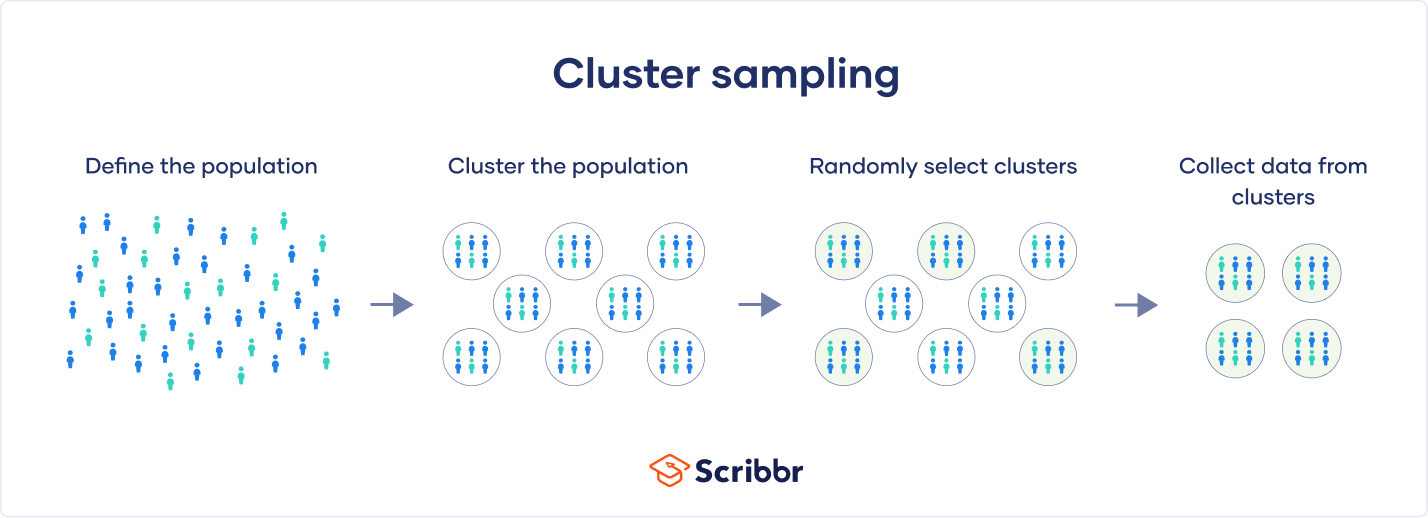
Cluster Sampling groups customers into distinct clusters based on specific characteristics such as geographic location or purchasing behavior. By randomly selecting entire clusters to survey, companies can efficiently reach diverse customer segments.
Width: 601px, Height: 218px
Width: 0px, Height: 0px
Width: 1286px, Height: 466px
Width: 1283px, Height: 465px
Width: 1282px, Height: 465px
Width: 1278px, Height: 464px
Width: 1277px, Height: 463px
Width: 1275px, Height: 463px
Width: 1272px, Height: 461px
Width: 1266px, Height: 459px
Width: 1263px, Height: 458px
Width: 1253px, Height: 455px
Width: 1246px, Height: 452px
Width: 1241px, Height: 450px
Width: 1220px, Height: 443px
Width: 1203px, Height: 436px
Width: 1190px, Height: 432px
Width: 1175px, Height: 426px
Width: 1156px, Height: 419px
Width: 1140px, Height: 414px
Width: 1123px, Height: 407px
Width: 1102px, Height: 400px
Width: 1082px, Height: 392px
Width: 1075px, Height: 390px
Width: 1051px, Height: 381px
Width: 1026px, Height: 372px
Width: 1015px, Height: 368px
Width: 1003px, Height: 364px
Width: 996px, Height: 361px
Width: 991px, Height: 359px
Width: 985px, Height: 357px
Width: 981px, Height: 356px
Width: 976px, Height: 354px
Width: 970px, Height: 352px
Width: 967px, Height: 351px
Width: 958px, Height: 348px
Width: 951px, Height: 345px
Width: 947px, Height: 344px
Width: 938px, Height: 340px
Width: 933px, Height: 338px
Width: 927px, Height: 336px
Width: 922px, Height: 334px
Width: 912px, Height: 331px
Width: 903px, Height: 328px
Width: 891px, Height: 323px
Width: 885px, Height: 321px
Width: 868px, Height: 315px
Width: 866px, Height: 314px
Width: 860px, Height: 312px
Width: 853px, Height: 309px
Width: 843px, Height: 306px
Width: 833px, Height: 302px
Width: 826px, Height: 300px
Width: 820px, Height: 297px
Width: 815px, Height: 296px
Width: 811px, Height: 294px
Width: 808px, Height: 293px
Width: 797px, Height: 289px
Width: 793px, Height: 288px
Width: 786px, Height: 285px
Width: 782px, Height: 284px
Width: 778px, Height: 282px
Width: 777px, Height: 282px
Width: 776px, Height: 281px
Width: 773px, Height: 280px
Width: 768px, Height: 279px
Width: 767px, Height: 278px
Width: 766px, Height: 278px
Width: 765px, Height: 278px
Width: 763px, Height: 277px
Width: 760px, Height: 276px
Width: 756px, Height: 274px
Width: 751px, Height: 272px
Width: 748px, Height: 271px
Width: 746px, Height: 271px
Width: 742px, Height: 269px
Width: 735px, Height: 267px
Width: 731px, Height: 265px
Width: 730px, Height: 265px
Width: 721px, Height: 262px
Width: 711px, Height: 258px
Width: 702px, Height: 255px
Width: 688px, Height: 250px
Width: 680px, Height: 247px
Width: 675px, Height: 245px
Width: 673px, Height: 244px
Width: 672px, Height: 244px
Width: 671px, Height: 243px
Width: 671px, Height: 243px
Width: 670px, Height: 243px
Width: 668px, Height: 242px
Width: 664px, Height: 241px
Width: 660px, Height: 239px
Width: 660px, Height: 239px
Width: 654px, Height: 237px
Width: 653px, Height: 237px
Width: 650px, Height: 236px
Width: 648px, Height: 235px
Width: 648px, Height: 235px
Width: 646px, Height: 234px
Width: 646px, Height: 234px
Width: 644px, Height: 234px
Width: 643px, Height: 233px
Width: 641px, Height: 233px
Width: 641px, Height: 233px
Width: 640px, Height: 232px
Width: 639px, Height: 232px
Width: 638px, Height: 231px
Width: 635px, Height: 230px
Width: 633px, Height: 230px
Width: 631px, Height: 229px
Width: 630px, Height: 229px
Width: 629px, Height: 228px
Width: 624px, Height: 226px
Width: 623px, Height: 226px
Width: 620px, Height: 225px
Width: 619px, Height: 225px
Width: 616px, Height: 223px
Width: 614px, Height: 223px
Width: 611px, Height: 222px
Width: 610px, Height: 221px
Width: 610px, Height: 221px
Width: 610px, Height: 221px
Width: 610px, Height: 221px
Width: 608px, Height: 221px
Width: 606px, Height: 220px
Width: 604px, Height: 219px
Width: 603px, Height: 219px
Width: 601px, Height: 218px
Width: 601px, Height: 218px
Width: 601px, Height: 218px
Cluster Sampling is particularly useful when you aim to gather detailed feedback from specific segments, optimize your survey resources, and still capture a broad spectrum of customer perspectives.
» Characteristics of Cluster Sampling
Below are some of the prominent aspects that stand out in cluster sampling.
› 1) Targeted Segmentation
Cluster Sampling allows you to concentrate on specific segments of your customer base, whether they’re customers from a particular region or those who share similar purchasing habits.
› 2) Cost and Time Efficiency
Surveying entire clusters reduces the time and resources needed compared to reaching out to individuals scattered across different segments.
Coordinating surveys within specific clusters simplifies the logistics, making the entire process more manageable and less time-consuming.
› 3) Improved Response Rates
Customers within the same cluster often share similar interests or characteristics, which can lead to higher customer engagement and response rates.
Being part of a cluster can create a sense of community, encouraging customers to share their experiences and opinions more openly.
› 4) Diverse Insights
Even within targeted clusters, you can capture a wide range of perspectives. This diversity ensures that your survey results reflect the multifaceted nature of your customer base, providing a richer understanding of different segments.
› 5) Scalability
As your customer base grows, Cluster Sampling remains a scalable method. You can easily add new clusters or adjust existing ones to accommodate changes in your customer demographics or market conditions.
» Tips for Using Cluster Sampling in Customer Surveys
When working with a large and diverse customer base, cluster sampling can make collecting feedback easier and more organized.
It involves dividing customers into groups (or clusters) based on shared traits, like where they live or their buying habits. By selecting whole clusters to survey, you save time and still gather insights that represent your audience. Here’s how you can make the most of this approach.
› 1) Create Clusters That Align With Your Goals
Think about what your survey is trying to achieve and use that to decide how to group your customers. If you’re interested in regional preferences, divide them by location.
If it’s about product behavior, organize them based on what they’ve purchased. Your clusters should directly tie into your objectives to ensure the feedback is relevant and useful.
› 2) Randomly Select Which Clusters to Survey
Rather than choosing clusters based on convenience or assumptions, let randomness guide your selection. This keeps the process fair and ensures you’re not unintentionally favoring one group over another.
For example, if you’re working with geographic clusters, let a randomizer tool decide which regions to survey rather than manually picking specific ones.
› 3) Keep Clusters Similar in Size
When clusters vary too much in size, the results can be skewed. To avoid this, try to balance the size of your clusters as much as possible.
If that’s not feasible, adjust the number of responses you collect from larger clusters to prevent them from dominating the data. This way, every group has an equal voice in the results.
› 4) Base Clusters on Solid Data
Your clusters should be rooted in real, measurable information—like customer location, spending patterns, or interaction history.
Avoid guessing or relying on gut instincts to group customers. Data-backed clusters provide insights that reflect actual customer behavior, making your results much more reliable.
› 5) Test Your Strategy With a Small Pilot Run
Before launching a full-scale survey, start small with one or two clusters. This lets you test your method and catch any issues early, like poorly defined groups or low response rates.
A trial run can save time and effort later by helping you refine your approach before expanding it.
› 6) Design Clusters to Match Your Survey Purpose
Your clusters should make sense for what you’re trying to learn. For instance, if you want to understand how customers feel about your products, group them by purchase history.
If you’re exploring regional differences, organize them by location. Tailoring clusters to your specific questions leads to insights you can act on.
› 7) Explain the Survey’s Purpose to Participants
When reaching out to customers, explain why their feedback matters. For instance, tell a regional cluster how their input will help improve services in their area.
People are more likely to respond when they understand the impact of their feedback and feel it’s worth their time.
› 8) Keep Clusters Separate and Clear
Avoid any overlap when defining your clusters. Each customer should belong to only one group, so there’s no confusion about where their responses fit.
For example, if you’re using purchase history as a basis, make sure a customer doesn’t fall into both “frequent buyers” and “new customers” clusters.
› 9) Check If Clusters Represent the Whole Audience
Once you’ve gathered responses, look back at your clusters to see if they reflect your overall customer base. If a significant segment is missing or underrepresented, adjust your process for future surveys to ensure your results are inclusive and accurate.
› 10) Study Each Cluster’s Feedback Individually
Don’t rush to combine the results from all your clusters. Start by analyzing the feedback from each group on its own. This helps you notice patterns or preferences unique to specific clusters. For example, you might find that customers in one region value fast delivery while others prioritize discounts.
» Comparing Systematic Sampling Vs. Cluster Sampling
Choosing the right sampling method depends on the type of feedback you want, the nature of your customer base, and the resources you have at hand.
While systematic sampling provides a structured way to capture responses evenly across a broad audience, cluster sampling allows you to focus on specific groups, making it highly efficient for segmented insights.
Below is a comparison to help you decide which method suits your needs.

Width: 600px, Height: 457px
Width: 0px, Height: 0px
Width: 1277px, Height: 973px
Width: 1239px, Height: 944px
Width: 1234px, Height: 940px
Width: 1225px, Height: 933px
Width: 1218px, Height: 928px
Width: 1202px, Height: 916px
Width: 1192px, Height: 908px
Width: 1180px, Height: 899px
Width: 1174px, Height: 894px
Width: 1157px, Height: 882px
Width: 1148px, Height: 875px
Width: 1143px, Height: 871px
Width: 1137px, Height: 866px
Width: 1129px, Height: 860px
Width: 1124px, Height: 856px
Width: 1114px, Height: 849px
Width: 1098px, Height: 837px
Width: 1087px, Height: 828px
Width: 1069px, Height: 814px
Width: 1058px, Height: 806px
Width: 1049px, Height: 799px
Width: 1040px, Height: 792px
Width: 1033px, Height: 787px
Width: 1023px, Height: 779px
Width: 1014px, Height: 773px
Width: 1005px, Height: 766px
Width: 999px, Height: 761px
Width: 985px, Height: 750px
Width: 978px, Height: 745px
Width: 969px, Height: 738px
Width: 959px, Height: 731px
Width: 952px, Height: 725px
Width: 944px, Height: 719px
Width: 938px, Height: 715px
Width: 930px, Height: 709px
Width: 923px, Height: 703px
Width: 917px, Height: 699px
Width: 890px, Height: 678px
Width: 875px, Height: 667px
Width: 865px, Height: 659px
Width: 855px, Height: 651px
Width: 843px, Height: 642px
Width: 837px, Height: 638px
Width: 829px, Height: 632px
Width: 820px, Height: 625px
Width: 813px, Height: 619px
Width: 808px, Height: 616px
Width: 803px, Height: 612px
Width: 789px, Height: 601px
Width: 779px, Height: 593px
Width: 773px, Height: 589px
Width: 767px, Height: 584px
Width: 762px, Height: 581px
Width: 758px, Height: 578px
Width: 753px, Height: 574px
Width: 748px, Height: 570px
Width: 742px, Height: 565px
Width: 737px, Height: 562px
Width: 735px, Height: 560px
Width: 727px, Height: 554px
Width: 722px, Height: 550px
Width: 719px, Height: 548px
Width: 714px, Height: 544px
Width: 712px, Height: 542px
Width: 708px, Height: 539px
Width: 707px, Height: 539px
Width: 704px, Height: 536px
Width: 703px, Height: 536px
Width: 702px, Height: 535px
Width: 700px, Height: 533px
Width: 699px, Height: 533px
Width: 698px, Height: 532px
Width: 695px, Height: 530px
Width: 692px, Height: 527px
Width: 688px, Height: 524px
Width: 685px, Height: 522px
Width: 684px, Height: 521px
Width: 680px, Height: 518px
Width: 679px, Height: 517px
Width: 678px, Height: 517px
Width: 675px, Height: 514px
Width: 674px, Height: 513px
Width: 672px, Height: 512px
Width: 669px, Height: 510px
Width: 668px, Height: 509px
Width: 668px, Height: 509px
Width: 668px, Height: 509px
Width: 667px, Height: 508px
Width: 662px, Height: 504px
Width: 657px, Height: 501px
Width: 654px, Height: 498px
Width: 652px, Height: 497px
Width: 649px, Height: 494px
Width: 648px, Height: 494px
Width: 643px, Height: 490px
Width: 640px, Height: 488px
Width: 639px, Height: 487px
Width: 637px, Height: 485px
Width: 635px, Height: 484px
Width: 633px, Height: 482px
Width: 633px, Height: 482px
Width: 630px, Height: 480px
Width: 628px, Height: 478px
Width: 625px, Height: 476px
Width: 624px, Height: 475px
Width: 622px, Height: 474px
Width: 620px, Height: 472px
Width: 617px, Height: 470px
Width: 614px, Height: 468px
Width: 613px, Height: 467px
Width: 612px, Height: 466px
Width: 609px, Height: 464px
Width: 607px, Height: 462px
Width: 605px, Height: 461px
Width: 604px, Height: 460px
Width: 603px, Height: 459px
Width: 602px, Height: 459px
Width: 602px, Height: 459px
Width: 602px, Height: 459px
Width: 600px, Height: 457px
» Conclusion
The choice between systematic sampling and cluster sampling isn’t about which method is better—it’s about what works best for your specific needs. If you’re looking to gather feedback evenly from across your entire customer base, systematic sampling offers a straightforward and balanced approach.
However, when your goal is to explore specific groups more deeply or focus on distinct customer traits, cluster sampling helps you achieve that goal without overcomplicating the process.
It’s important to start with a clear purpose. Think about what insights you’re trying to uncover, who you need to hear from, and the resources you have available. When used thoughtfully, both methods can deliver meaningful results.
If needed, don’t shy away from combining the two—sometimes, that’s the best way to balance broad reach with focused depth.
The real value of any survey isn’t just in the data you collect but in how you act on it. Whether you’re using systematic or cluster sampling, make sure the feedback you gather translates into decisions that improve your products, services, and the overall experience for your customers. That’s what makes the effort worthwhile.