
On this page
Marketing teams often lose hours to manual follow-ups, nurturing campaigns that struggle to scale, lack personalization and offer poor visibility. Email workflow automation offers a way to close those gaps without adding headcount. Based on insights from Emma, a company that builds email marketing and automation tools, the fix starts with understanding what these tools can realistically take off a team's plate.
» How Automated Workflows and Behavioral Triggers Take Follow-Up off Your Plate
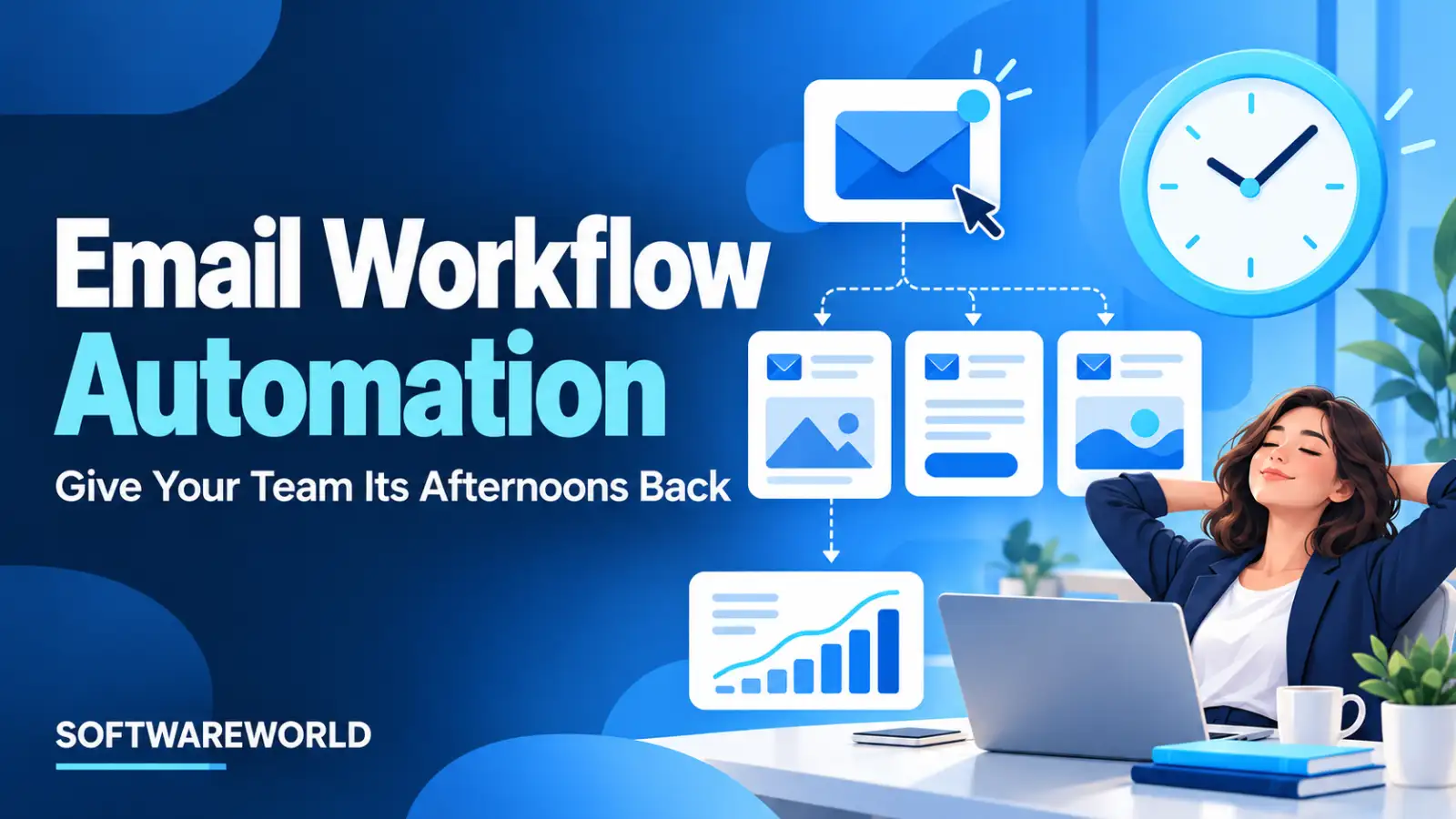
Setting up an automated workflow means building a sequence of emails or actions once, then letting it run on its own. A behavioral trigger, like a click, a signup, a purchase or a site visit, tells that workflow when to fire, so the system reacts to what someone does rather than waiting on a person to notice.
Before this kind of system existed, someone had to check a calendar, pull a list and figure out who needed which message next, often juggling that process alongside a full inbox. Automated workflows shift that responsibility to the behavior itself, so timing depends on specific actions rather than on whoever happens to be paying attention that day.
» Building Customer Journeys That Scale Without More Hands on Deck
Email workflow automation maps out a branching customer journey rather than building a separate campaign for every segment it needs to reach. One sequence then covers many paths simultaneously, letting a lean team run programs that would otherwise need extra staff to pull off.
Research on automated lead nurturing backs this up, though the results carry nuance. Across several studies, pairing automation with timely content increased the probability that a lead would convert by 0 to 23 percentage points, depending heavily on a lead's sales cycle length and existing relationship with the seller.
That nuance matters because the research uncovered that automation adds the most value by making outreach more informed and relevant, not simply by replacing a person's response. Scale alone doesn't prove results, so it still helps to check performance against a team's specific audience and sales cycle.
Emma makes a similar point about staying consistent as a program grows, stating that a nurture sequence "keeps your rhythm running even when your team is pulled in different directions," because the system handles each send without requiring someone to set it in motion.
» Using Segmentation and Personalization to Keep Messages Relevant
Segmentation sorts subscribers by behavior or traits, while personalization determines what each group actually receives. Paired together, the two turn a single email program into messaging that feels specific to each recipient rather than identical for everyone on a list.
A large-scale analysis spanning hundreds of studies found that tailored messaging can persuade more consistently than generic, one-size-fits-all content, with minimal downside even when personalization gets specific. Messages tied to something meaningful, such as a person's interests or values, also outperformed those built on surface-level details alone.
Emma's guide to automation applies this idea to welcome sequences, where timing can matter as much as the message. A welcome email that reaches someone exactly when their interest peaks catches a new subscriber while they're still "most excited and ready to hear from your brand," making the send feel timely instead of routine.
Birthday and anniversary sends carry that approach forward, since, as Emma notes, "date-based messages like these are a nice personal touch that show them you care." Little moments keep a brand feeling attentive without demanding extra manual effort from a team that's already stretched thin.
» Turning Integrations and Analytics Into Proof Your Campaigns Work
Connecting an automated email marketing platform to the rest of a team's tech stack, including customer relationship management systems and e-commerce platforms, lets each send pull data that lives outside the inbox. Analytics then captures how every message actually performs, giving a team something concrete to act on instead of a guess.
Marketing teams have quickly picked up on this, and adoption of artificial intelligence-powered automation and reporting tools has climbed sharply across the industry. That adoption rate rose from 13.1% to 24.2% over just two years, with reporting and performance measurement among the fastest-growing areas marketers have added to their programs.
You May Also Like: List of AI-Powered Marketing Automation Software
Leaders expect that reliance to grow further in the years ahead, a sign that proof of performance is no longer optional. Showing results through integrations and analytics is quickly becoming a baseline expectation rather than a competitive edge.
» Give Your Team Its Afternoons Back With Smarter Automation
Workflows, journeys, personalization and analytics all work toward the same outcome by giving a team more time for strategy instead of scheduling. Email workflow automation exists to protect a team's hours, not just its inbox. The real payoff shows up the next time a team actually gets its afternoon back.


