On this page
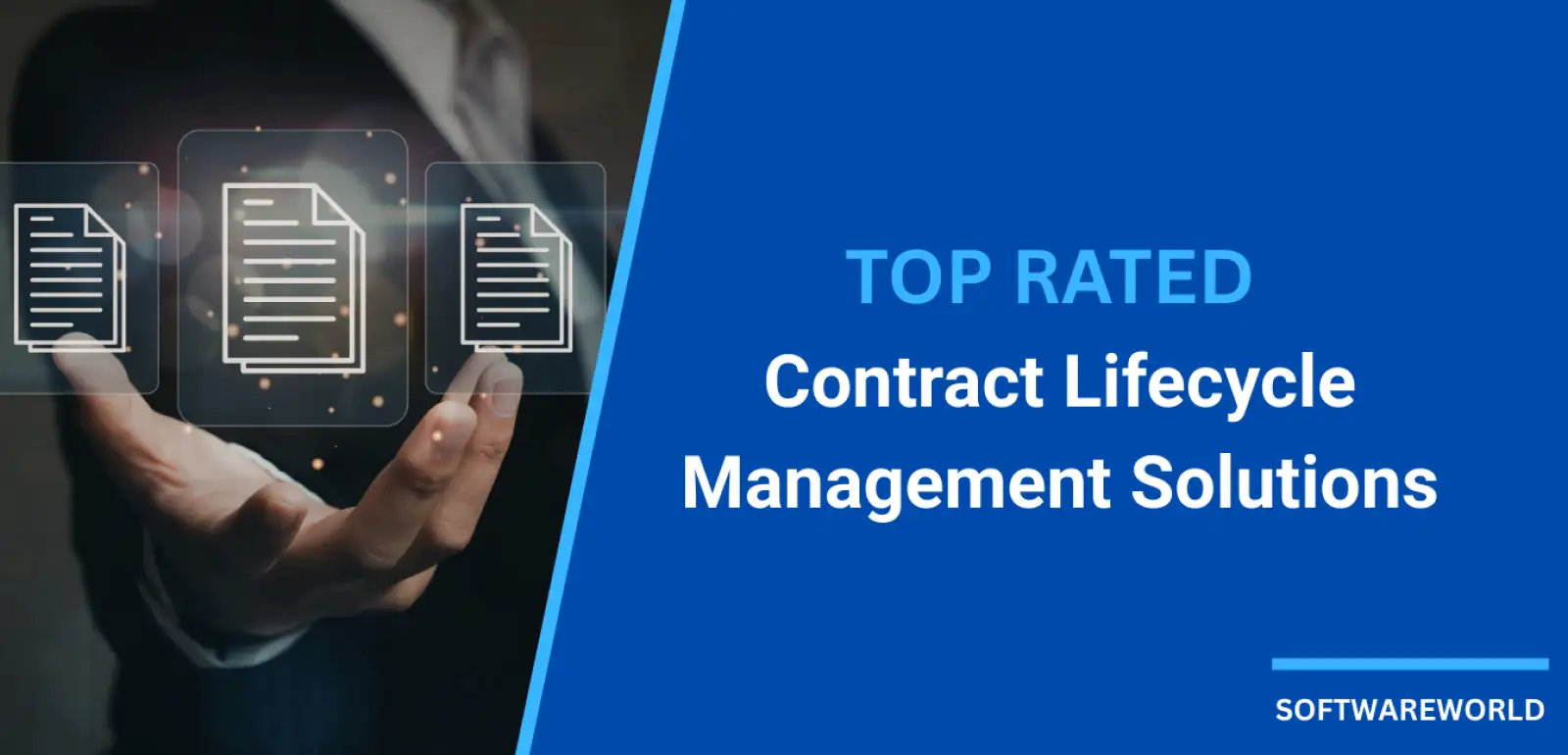
Contracts keep businesses going, yet managing them is not always as easy as it should be. Many businesses still have files scattered across their systems and use outdated manual tracking methods. These kinds of implementations can cause missed deadlines and increased compliance risks.
In industries that move quickly, even small gaps in visibility across a contract portfolio can quickly turn into expensive delays. That is why more businesses are using contract lifecycle management (CLM) software to make every step of the contract process more organized, clear and manageable.
» The Common Setbacks in the Contract Lifecycle
Some groups struggle to keep contracts in order and move quickly. When contracts go through multiple teams, small problems can quickly escalate. Without the right systems in place, what should be a well-organized process can turn into a mess of scattered emails, spreadsheets and documents.
› Slow and Error-Prone Manual Processes
Many companies still use manual processes to draft and approve contracts. It is challenging to keep track of multiple document versions when they are emailed back and forth for changes, and approvals get lost in inboxes. These delays lengthen negotiations and can leave both internal and external teams impatient.
Manual processes also increase the likelihood of mistakes. It can be hard to remain compliant or settle disputes later on if you refer to the wrong version of a contract. These inefficiencies slow operations over time, hurting productivity and deal speed.
› Lack of Visibility and Control
Contract data visibility is another concern. It can be hard to see your obligations when contracts are stored in different tools and internal systems. Only 39% of practitioners think their contracts get the results they want, and this is partly because contract data is spread out over an average of 24 different systems.
When information is spread across so many platforms, teams often struggle to track how well their contracts are doing or to quickly find the information they need. This lack of visibility makes it hard to keep an eye on things and raises the risk that important duties will be missed.
› Missed Renewals and Deadlines
Deadlines for contracts have real effects on finances and operations. Many businesses rely on manual reminders or calendar tracking to monitor expiration dates and compliance milestones.
If businesses miss important dates, they may miss chances to renegotiate terms or cancel contracts before automatic renewals happen. These mistakes can force businesses to agree to terms that aren't in their best interests or to spend money they don't need to. Failing to track contract deadlines over time can lead to avoidable costs.
» The Key Advantages of CLM Solutions
Many businesses see contract lifecycle management solutions as important investments. By replacing broken workflows with centralized systems, businesses can better control their contracts and make better decisions across departments.
› Centralized and Secure Contract Repository
One of the best things about CLM platforms is that they let you keep all of your contracts in one safe place. Teams no longer have to search through shared drives, email threads or multiple internal tools. They can all access a central repository that has all the contract data they need.
Another advantage of CLMs is security. Contracts often contain private business information, so it is important to control who can access them and store them safely. Approximately 82% of businesses expect CLM platforms to have a central, secure place to store contracts. This highlights the importance of protecting and organizing data in modern contract management.
› Automation and Greater Efficiency
Automation helps make the whole contract lifecycle more efficient. CLM solutions can streamline document creation and approval, reducing the time it takes to get a contract from draft to signature.
Teams can spend less time on administrative tasks and more time on strategic work by eliminating many repetitive manual steps. Faster turnaround times also help businesses close deals more quickly and run their relationships more smoothly.
› Full Visibility and Proactive Insights
Dashboards and analytics are available on modern CLM platforms to help businesses better understand their contract data. Teams can monitor performance and spot risks before they become bigger problems when they can easily see the status of contracts, obligations and key milestones in real time.
Many companies are actively seeking these insights. According to surveys, at least 55% of businesses want their contract management tools to include analytics and obligation-tracking features. They can use analytics to gain useful insights and take control of their agreements.
» How to Evaluate Contract Lifecycle Management Solutions?
Companies should think about how well a lifecycle management solution fits their workflows, works with their current systems, and helps them keep an eye on long-term contracts. A structured evaluation process can help decision-makers find solutions that meet both operational needs and long-term goals.
When comparing contract lifecycle management platforms, consider the following criteria:
- Core functionality and features: Verify that the platform includes the features the business needs. Some of these features could be automated workflows, clause libraries, contract templates, reporting dashboards and artificial intelligence (AI)-driven analysis.
- Ease of use and adoption: If teams have trouble using a platform, it will not be useful, regardless of how powerful it is. Look for solutions with easy-to-use dashboards and interfaces.
- Integration capabilities: Contract data hardly exists on its own. To keep data consistent across systems, a good CLM solution should work well with other tools.
- Security and compliance: Strong security measures help keep contract data safe and meet regulatory requirements. Check the platform's security features, such as access controls, encryption, audit trails and compliance certifications.
» What to Ask a CLM Solutions Provider?
When choosing a contract lifecycle management solution, you usually have to talk to vendors and product teams. Organizations can better understand how well a platform will fit their workflows and long-term goals by asking the right questions during these talks.
Before signing up with a CLM provider, consider asking the following questions:
- How does the process of putting it into action look? Find out how long it will take to implement and what resources the internal team will need. A clear onboarding process can help things go more smoothly and get people to use the new system faster.
- What kinds of training and help are available? How well teams are trained is often a key factor in adoption success. Find out whether the provider offers onboarding sessions, documentation, ongoing training and responsive customer support.
- How are prices set up? CLM solutions may use pricing models such as tiered plans or user-based subscriptions. Knowing what is included and what costs extra can help you avoid paying for things you didn't expect.
- What does the platform do to make integration easier? Because contracts are often managed in coordination with other business systems, find out how the platform works with tools like a CRM or e-signature tool. Strong integration capabilities make it easier for departments to work together.
- What is the product roadmap? A provider's roadmap shows how the platform will change over time. Asking about new features can help you determine whether the solution will still meet the organization's needs as it grows.
» What Are the Top-Rated Contract Lifecycle Management Solutions?
The market for CLM solutions has grown quickly as companies seek better ways to manage contracts. These platforms are the best at making workflows easier and helping businesses keep tight control over their contract processes.
1) Agiloft
Width: 0px, Height: 0px
Source: https://www.agiloft.com/
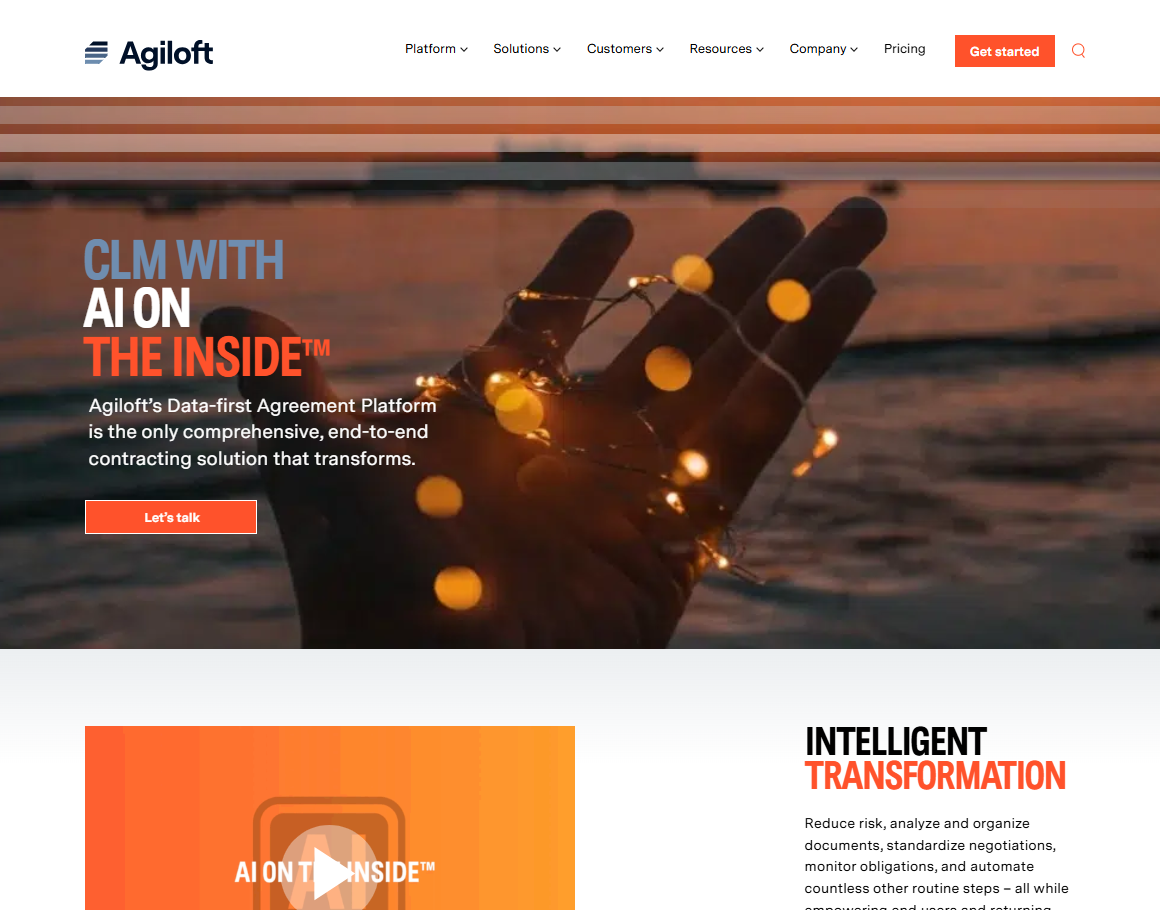
Most know Agiloft as one of the best and most flexible platforms for managing the whole contract lifecycle. It works with all kinds of businesses and helps you make contracts more quickly while still keeping a close eye on your obligations and risks. The platform's no-code architecture also lets you change workflows and processes without requiring much technical knowledge, making it easily tailored to each business's needs.
Key Features:
- AI-powered contract review: Agiloft has built in AI-driven features at no extra cost. They help break down contract language and help you make decisions more quickly during negotiations.
- Automated workflows: You can set up workflows that streamline drafting, approvals, and renewals, reducing manual steps throughout the contract lifecycle.
- End-to-end visibility: Centralized dashboards and tracking tools provide full visibility into the status of your contracts and key milestones.
2) Icertis
Width: 0px, Height: 0px
Source: https://www.icertis.com/
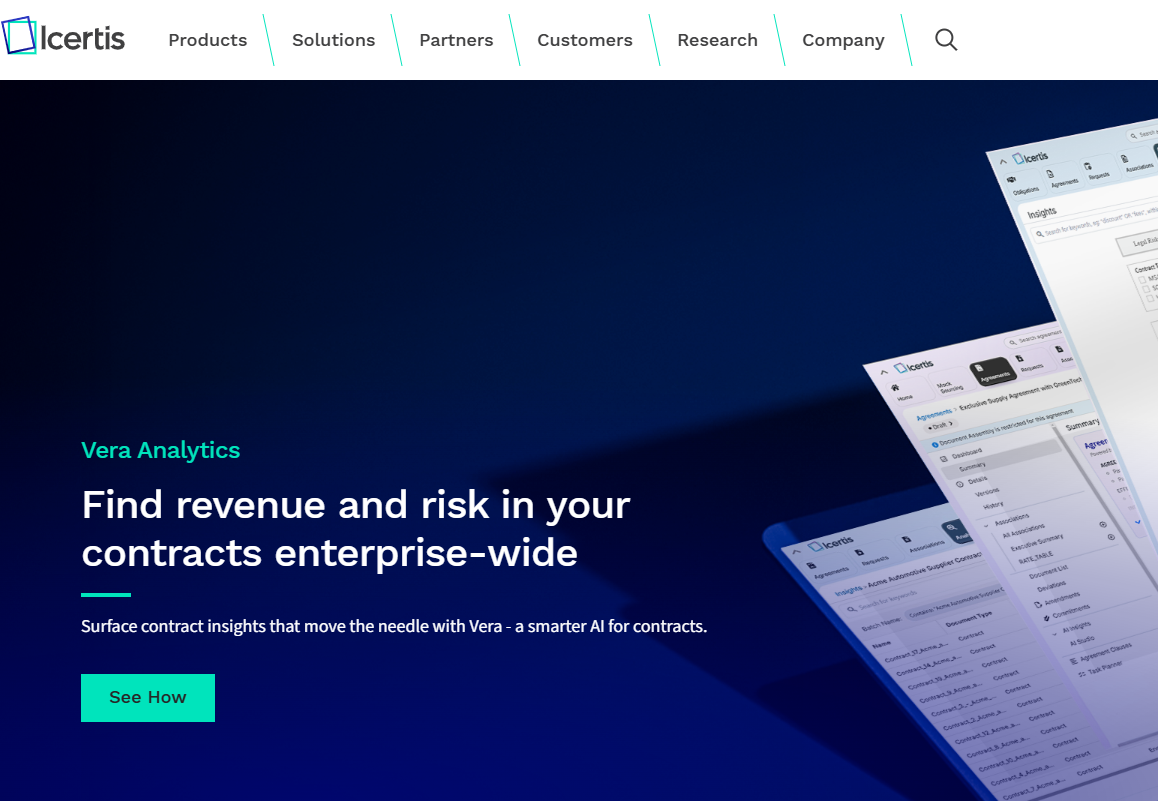
Icertis is a popular CLM used by many enterprises to handle complicated contract portfolios. The platform's main goal is to make contract processes more organized and smart, which helps businesses standardize their workflows and keep track of their obligations. Icertis is often a good choice for getting deep insights into how contracts are doing across departments and regions because it has strong analytics and can grow with a business.
Key Features:
- AI-driven contract intelligence: Icertis uses AI to analyze contract language and find useful information in contract data.
- Contract obligation tracking: It helps businesses keep track of obligations, deadlines and performance standards that are part of active agreements.
- Advanced analytics and reporting: Teams can monitor performance metrics and contract lifecycle milestones through dashboards and reporting tools.
3) DocuSign CLM
Width: 0px, Height: 0px
Source: https://www.docusign.com/
DocuSign CLM is a contract lifecycle management tool that automates contract creation and execution. It is built on the well-known DocuSign agreement platform and combines contract management with electronic signatures. This makes it easier for teams to go from drafting an agreement to signing it. The platform is especially useful for businesses that already use DocuSign for e-signatures and want a better way to handle the whole contract lifecycle.
Key Features:
- Integrated e-signature workflows: The platform makes it easy to connect contract management with DocuSign's popular electronic signature features.
- Automated contract workflows: These help get contracts through approvals, negotiations, and signing with as little human help as possible.
- Template and clause libraries: With DocuSign CLM, teams can make standard contract templates and clauses that can be used repeatedly to speed up the process of making documents.
» A Comparative Look at Leading CLM Solutions
The following table will help you compare the top CLMs and see how their features and functions align with your business's needs.
| Feature | Agiloft | Icertis | DocuSign CLM |
| Core Focus | Highly flexible, no-code platform for tailored business processes and risk management. | Enterprise-grade management for complex, large-scale contract portfolios with deep analytics. | Streamlining the entire agreement process, from creation to integrated e-signature. |
| AI Capabilities | AI features for contract review are built in and included at no extra cost. | Uses AI to analyze contract language and extract useful data insights. | Not specified |
| Workflow Automation | Automates drafting, approvals and renewals to reduce manual intervention. | Standardizes contract processes and helps track performance obligations. | Automates the path from negotiation and approvals through final signing. |
| Key Differentiator | Allows for deep customization of workflows and processes without needing technical expertise. | Provides advanced analytics and reporting for deep insights into contract performance. | Offers a native, fully integrated e-signature workflow for a seamless end-to-end experience. |
| Primary User Benefit | Adapts precisely to unique business needs for rapid contract creation and oversight. | Gives large organizations clear, intelligent oversight across all departments. | Simplifies and accelerates the process of finalizing and signing agreements. |
» Bringing Greater Control to Contract Management
To effectively manage contracts, you must be able to see and structure the whole process of making an agreement. Contract lifecycle management solutions help reduce risk and ensure critical contracts move forward without unnecessary delays. With the right platform, businesses can get better control over their contracts and help teams work together more smoothly.